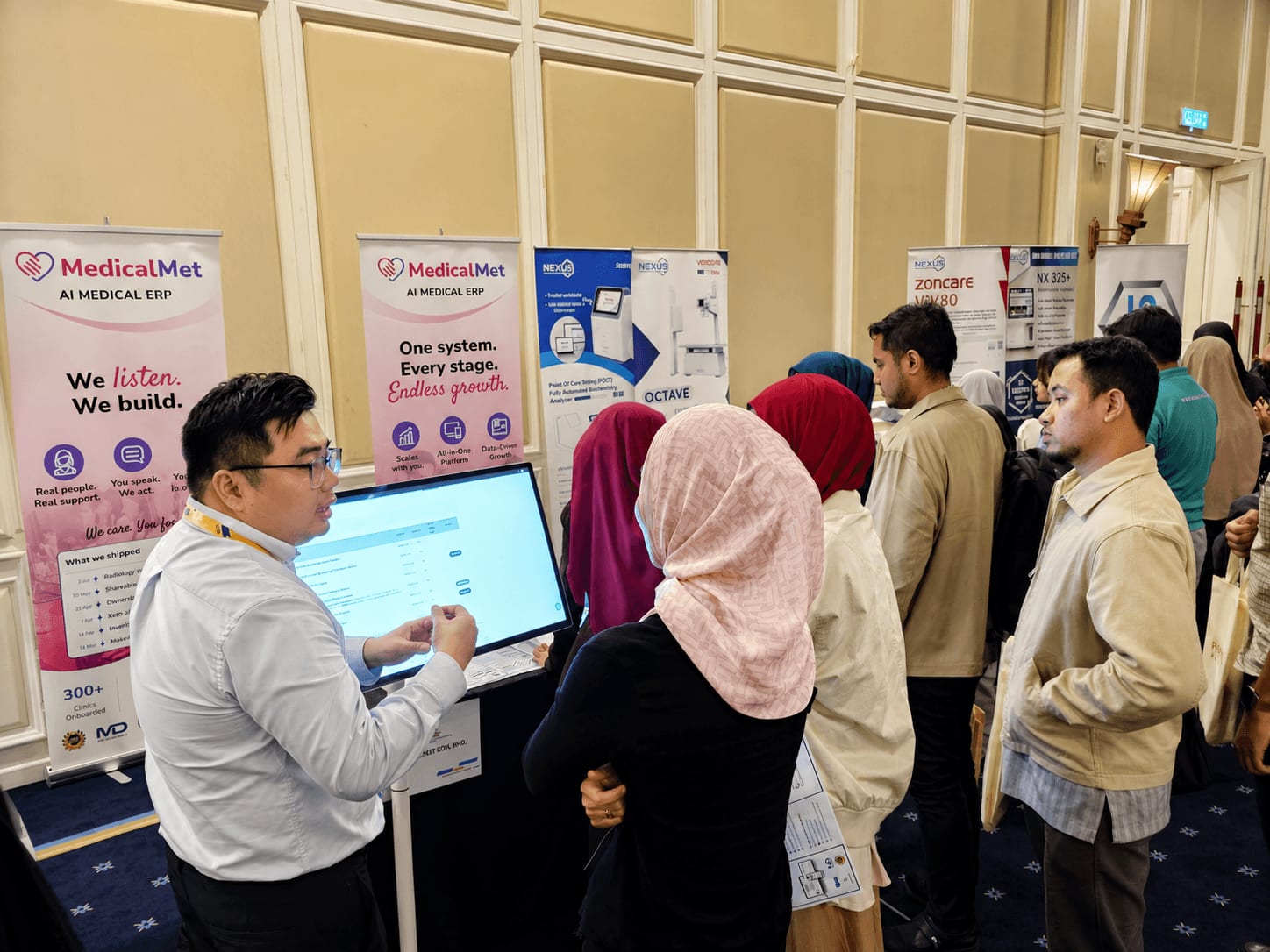
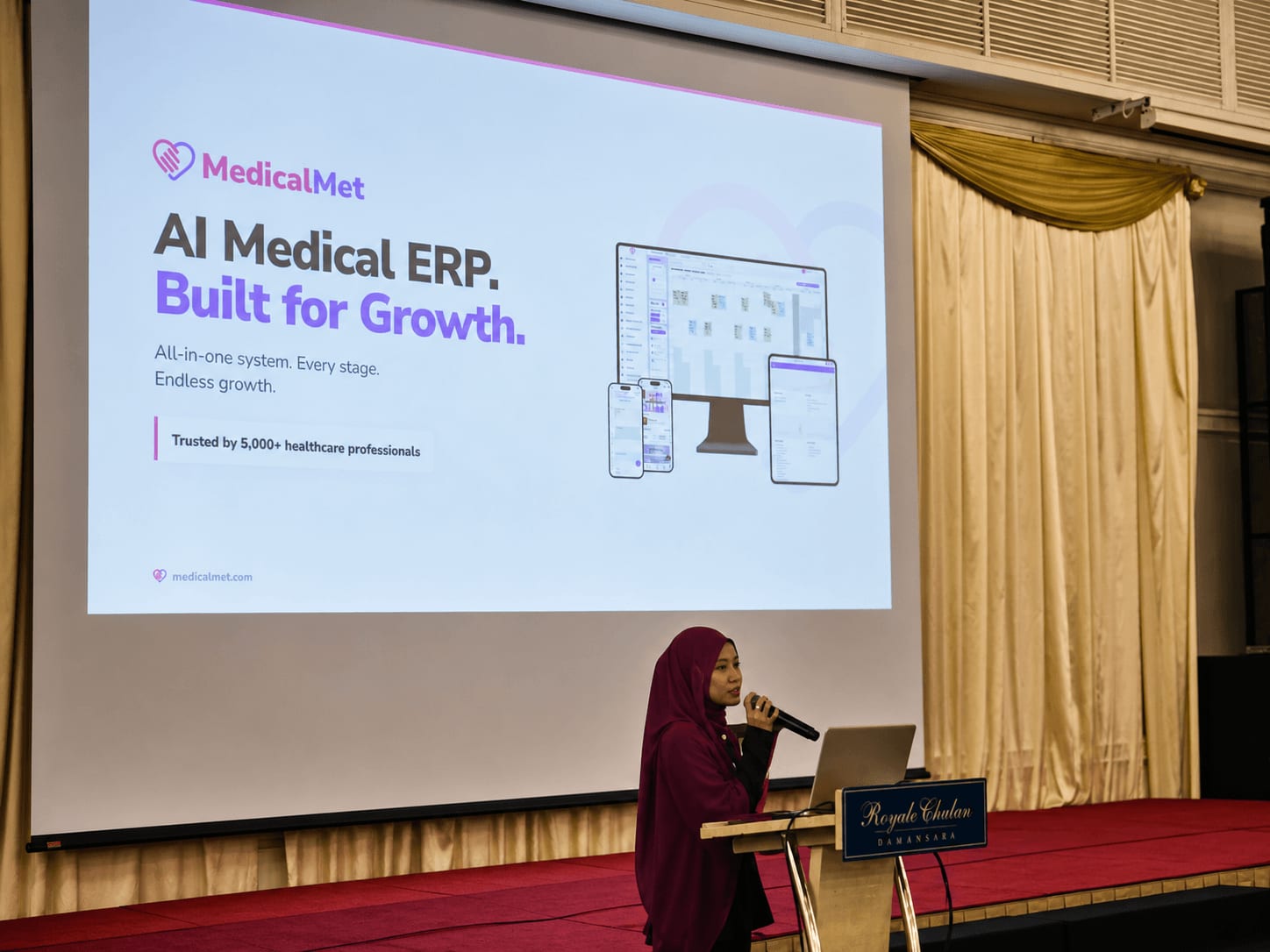
The do’s and don’ts of choosing a clinic system come down to one question: will this system still fit you after your third branch opens? MedicalMet spent 14 August 2026 answering it, as a contributing partner at the UniKlinik Group Incubator Program 2026 — a nine-day programme running from 8 to 16 August at Hotel Royale Chulan Damansara. The room was full of doctors preparing to run their own practice for the first time. We were not there to close deals. We were there to help them avoid the mistake that costs the most later: picking a system for the clinic they are opening this year instead of the clinic they want in five.
What Is the UniKlinik Incubator Program 2026?
The UniKlinik Group Incubator Program 2026 is a training programme for doctors who are setting up or taking over a clinic. It ran from 8 to 16 August 2026 at Hotel Royale Chulan Damansara. Participants sat through full working days with their laptops open — sessions on operations, compliance, finance, marketing and systems, then hands-on time with the vendors who supply all of it. MedicalMet came in on 14 August to cover the systems side: how to choose one, how to run it, and what it should do for the clinic once the doors are open.
It is a good room to be in for one reason. These doctors have not bought anything yet. There is no legacy system to defend, no data to migrate, no sunk cost to justify. Every question is asked from a clean start, which means you get asked the honest ones.
The programme at a glance
- Programme dates: 8–16 August 2026 (nine days)
- MedicalMet’s day: 14 August 2026 — stage sessions and booth
- Venue: Hotel Royale Chulan Damansara, Selangor
- Audience: doctors opening, buying or taking over a clinic
- Our sessions: choosing a clinic system, clinic growth case studies, integrated inventory and expiry control, lab case management, practitioner and commission reporting, WhatsApp marketing, LHDN e-Invoice with direct MyInvois submission, patient records, AI in daily workflow, hardware integrations
- Format: stage sessions plus a hands-on booth for one-to-one questions
What Should Doctors Look For When Choosing a Clinic System?
We gave the participants a checklist, not a pitch. Every item on it comes from watching clinics outgrow their software — usually two years in, usually at the worst possible moment. Run any system you are considering, including ours, against these questions before you sign anything.
- Ask what happens at branch two. Can one login see both branches? Is stock shared or separate? Can a patient walk into either branch and be recognised? If the answer is “we can arrange that” rather than “yes, here it is”, you are looking at a second migration.
- Ask who owns your data and how you get it out. You should be able to export patient records, invoices and stock history yourself, in a readable format, without paying an exit fee. Ask to see the export button during the demo.
- Ask about batch numbers and expiry dates — specifically. “Inventory” on a feature list can mean a simple stock count. Ask whether it tracks stock by batch, and whether dispensing pulls the nearest-expiry batch first.
- Ask how billing handles panels, packages and deposits. These three break more clinic accounts than anything else. See them demonstrated with real numbers, not slides.
- Ask whether it is compliant where you practise. In Malaysia that includes LHDN e-Invoice submission and PDPA-appropriate handling of patient data.
- Ask when the vendor last shipped an update. A dated changelog tells you more about the next three years than any brochure.
- Ask who answers the phone at 9am on a Monday. Support response time is a clinical issue, not an IT one, when the queue is full and billing will not load.
We also told them to run a demo with their own worst-case scenario, not the vendor’s happy path. Bring the messy repeat patient. Bring the panel claim with two items rejected. Bring the package that was half-used before the patient transferred branches. A system that handles the demo script beautifully and the real case badly is the one you will be fighting for years. Our own guide to choosing a clinic management system in Malaysia covers the same ground in more detail.
What Are the Most Common Mistakes When Choosing Clinic Software?
The don’ts were the part of the session that got the most questions afterwards. None of these are hypothetical. Each one is a pattern we have watched play out in clinics that came to us after the fact.
- Do not buy on monthly price alone. The real cost is the price plus the hours your staff spend working around what the software cannot do. A cheaper system that needs one extra admin hour a day is not cheaper.
- Do not buy separate tools for every job. One system for appointments, another for billing, a spreadsheet for stock, a notebook for commissions. Every gap between two tools becomes a re-typing job, and every re-typing job becomes an error.
- Do not skip the stock module because you are small. Expired medicine is money you already paid for. It is also the easiest loss in a clinic to prevent and the one most often discovered too late.
- Do not let paper records run in parallel “just in case”. Two sources of truth means neither is trusted. Pick a cutover date and commit to it.
- Do not ignore reporting until you need it. If you cannot see revenue per doctor, stock value and outstanding invoices on one screen, you are managing on feel.
Test the exit before you commit to the entry
During any demo, ask the vendor to export your patient list, invoice history and stock ledger in front of you. How easily that happens tells you exactly how the relationship will end — and every software relationship ends eventually. A vendor confident in the product will not hesitate.
Can One System Take You From Solo Practice to a Specialist Centre?
This was the core of our talk, and it is the reason we describe MedicalMet as an AI medical ERP rather than an appointment book. A clinic system is not a purchase you make once. It is the spine your operations grow along. MedicalMet is built to carry a practice from a single self-employed doctor to a multi-branch group, and on to a specialist centre or medical centre, without a migration at each step.

- Solo, self-employed: scheduling, patient records, billing and WhatsApp reminders — which cut no-shows by up to 90% (MedicalMet customer data, 2026).
- Growing clinic: stock control, queue management, commission plans for associate practitioners, and LHDN e-Invoice.
- Multi-branch group: shared patient records across branches, per-branch stock, consolidated reporting and an owner dashboard covering every location.
- Specialist centre or medical centre: the MedicalMet hospital information system — admissions, wards, departments, pharmacy, laboratory and radiology on the same spine.
“Choose the system you can still use after your third branch opens. Changing clinic software once is painful. Changing it three times, while you are also trying to grow, is how good clinics stall.”
— Cedric Lau, Business Development Manager, MedicalMet
What Did the Clinic Growth Case Studies Show?
Doctors are rightly sceptical of software claims, so we brought customer case studies instead of adjectives. Each one followed the same arc. A clinic grows, one part of operations hits a ceiling, and the manual workaround that held it together at twenty patients a day falls apart at sixty. The fix is almost never more staff. It is connecting the parts that were never connected. We walked through four of those ceilings: inventory and expiry, lab case management, practitioner pay, and getting patients back through the door.
Integrated inventory, lab management and practitioner reports
SmileBay Dental runs on MedicalMet for all three, and the three are the same system rather than three tools that need reconciling. Their salary runs sit on a complex commission matrix — the kind that used to mean a fortnight of manual work every cycle, because every practitioner’s pay depended on treatments, materials and lab costs that lived in different places.
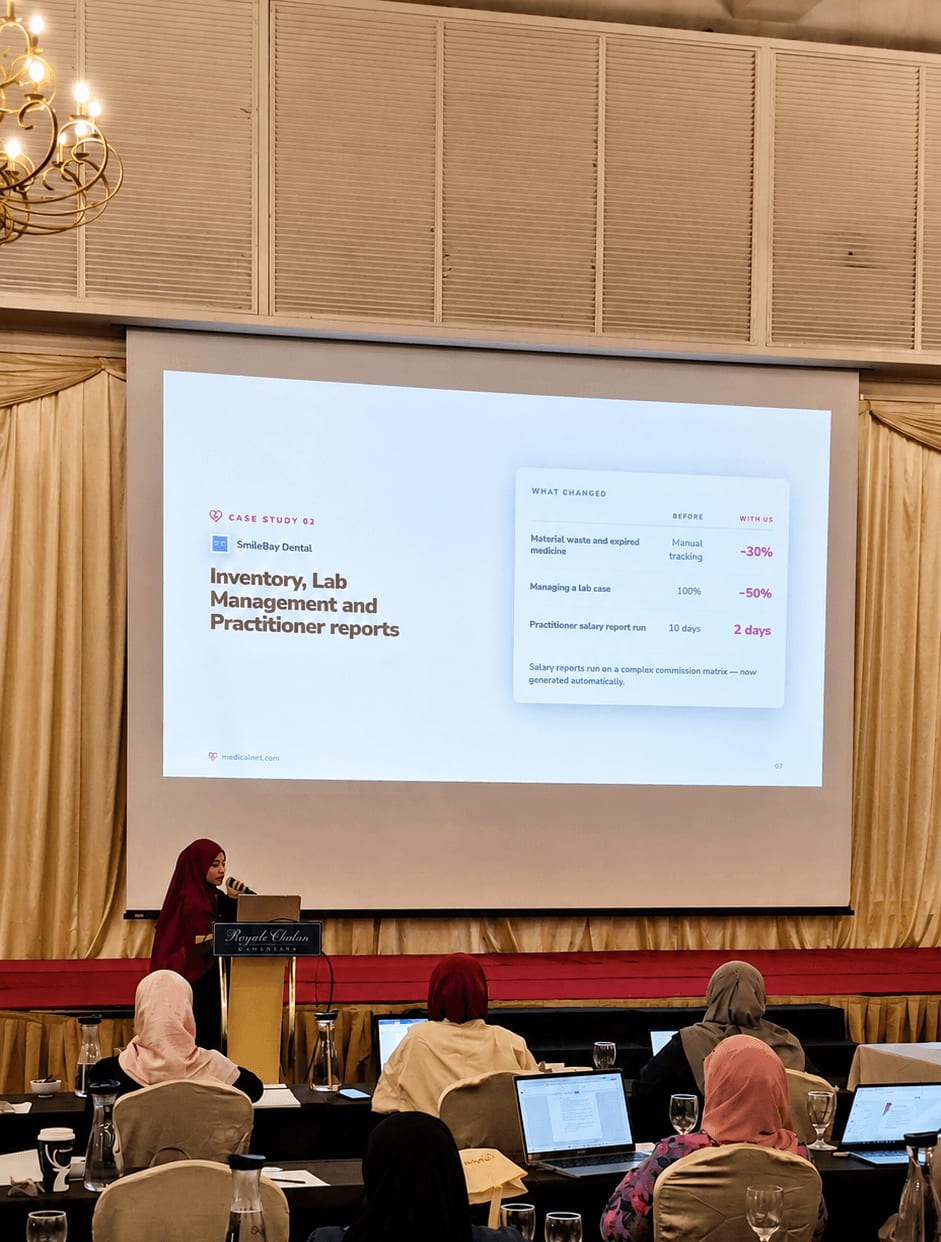
- Material waste and expired medicine: down 30%, moving from manual tracking to system tracking.
- Time spent managing a lab case: down 50%.
- Practitioner salary report run: from 10 days to 2 days, generated automatically off the commission matrix.
The expiry number is the one new clinic owners underestimate. Stock does not announce that it is about to expire — someone has to look. Inventory by batch with FEFO dispensing solves it structurally: every batch carries its own expiry date, and dispensing always pulls the nearest-expiry batch first, so short-dated stock leaves the shelf before it turns into a write-off. Nobody has to remember. That is the whole point.
The practitioner report is the part that surprised the room. Once treatments, materials, lab costs and commission plans sit in one system, the salary run stops being a reconciliation exercise and becomes a report you generate. Ten days to two. For a clinic owner planning to bring in associate doctors, that is the difference between growth you can administer and growth you cannot.
WhatsApp marketing: filling tomorrow’s appointment book
The second growth lever we presented costs almost nothing and gets skipped most often. Patients in Malaysia answer WhatsApp. They do not answer unknown phone numbers, and they do not read email. Clinics running WhatsApp appointment reminders through MedicalMet cut no-shows by up to 90% (MedicalMet customer data, 2026) — and a recovered no-show is pure margin, because the slot, the staff and the rent are already paid for.
Beyond reminders, we showed WhatsApp blasting used the way it actually works: recall campaigns to patients who have not returned in six months, follow-ups for a treatment package that stalled halfway, and seasonal campaigns timed to the calendar your patients live by — we wrote up the festive-season version in our guide to running WhatsApp campaigns over the Raya season. The list is built from your own patient records, which is the recurring theme of the whole session: the marketing is only as good as the records underneath it.
LHDN e-Invoice with direct MyInvois integration
The last case study was compliance, and it drew the most questions from doctors who are about to register a business. MedicalMet submits invoices to the LHDN MyInvois platform directly over API. Your front desk issues the invoice as normal; it is submitted, validated in real time and returned with the official QR code, in seconds. There is no CSV export, no third-party portal, no separate e-invoicing subscription — LHDN e-Invoice is included in every MedicalMet plan. Consolidated B2C submission covers walk-in patients, which is most of the volume in a GP or dental clinic.
Most clinics opening this year will start below the mandatory turnover threshold, and several participants asked whether they could therefore ignore it. Our answer was no — thresholds move, turnover grows, and the clinic that has to bolt on e-invoicing later does it during a busy year rather than a quiet one. Our complete LHDN e-Invoice guide for clinics sets out the current phases and what they mean for a practice.
Which AI Features and Hardware Integrations Did Doctors Ask About?
The booth is where the specific questions come out. Participants queued to see the system running rather than described, and two topics came back all day: how much of the paperwork can actually be automated, and what happens to the machines they are about to buy.
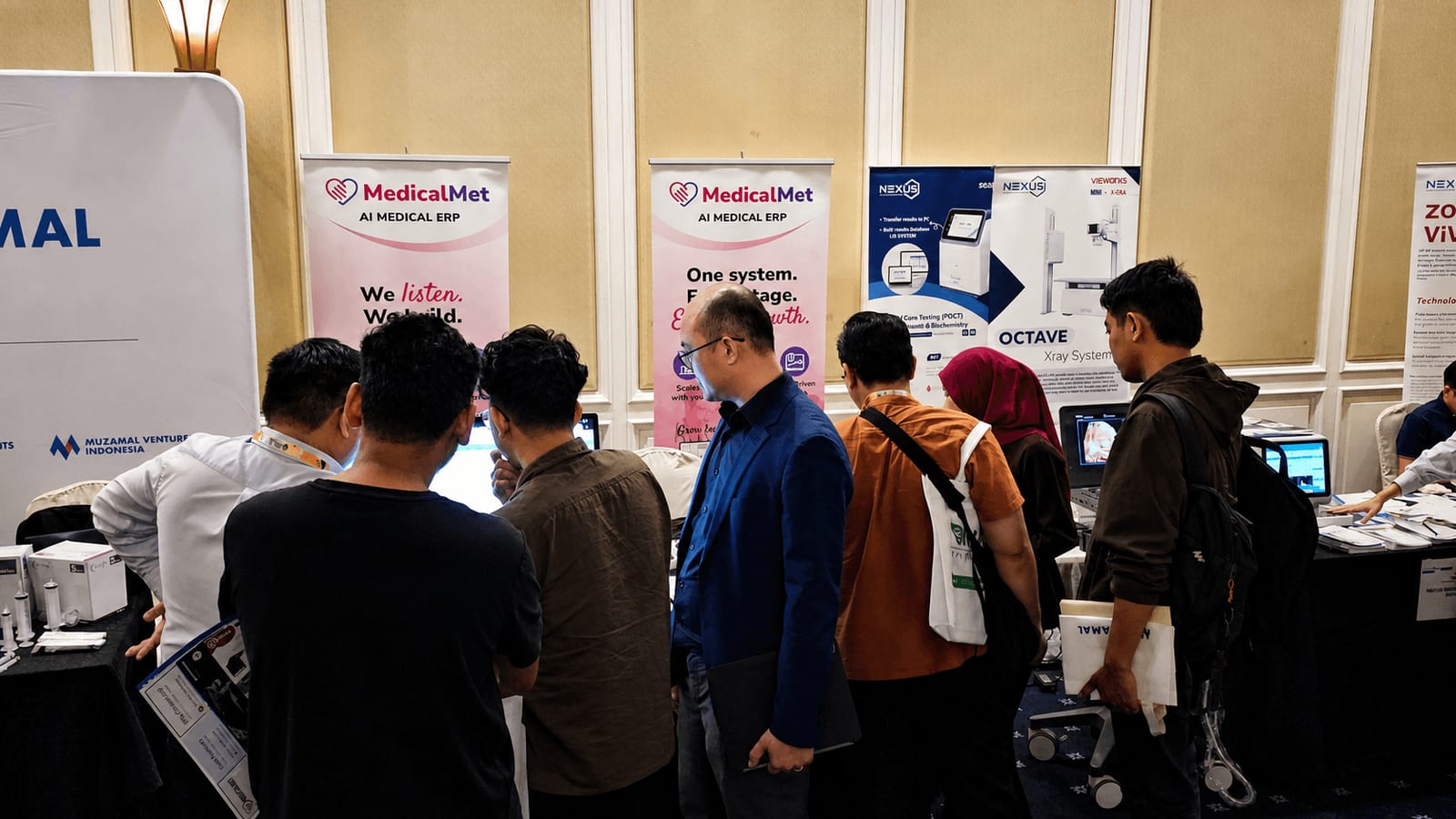
- AI treatment notes — speak the note, get a structured record. MedicalMet clinics have processed more than 10,000 voice-captured treatment notes to date (MedicalMet customer data, 2026).
- AI note translation — a note written in one language, produced in another for insurance, government or cross-border referral.
- Shareable patient questionnaires — intake completed before the patient arrives, landing straight in the record.
- AI customer profiling — patient badges that tell the front desk who is due, who is lapsing and who is worth a call.
- Radiology (RIS) — orders out to the modality and DICOM images plus a structured report back, over HL7 and FHIR.
- Integrations — accounting (Xero, AutoCount), payments and messaging, so the clinic system is not an island.
Hardware came up constantly, and it is a fair concern for anyone kitting out a new clinic. X-ray systems, point-of-care analysers and ultrasound units were being demonstrated on the tables around us. Our position on all of it is the same: a machine reading is only useful where the clinician is already looking. If the result lands in a separate vendor portal, someone re-types it into the patient record — or nobody does. Getting device output into the record is engineering work we are actively doing, and we would rather tell doctors plainly what is live today than promise a connector that does not exist yet.
Patient Records and Marketing: What New Clinics Underestimate
Two topics get postponed by almost every new clinic, and both cost real money. The first is patient records. A new clinic starts with a handful of patients and a system feels like overkill, so notes go into a template document and demographics into a spreadsheet. Eighteen months later there are four thousand patients, no reliable recall list, and no way to answer a simple question like which patients have not returned in a year.
The second is marketing. New clinic owners assume marketing means advertising spend. Most of the return sits closer to home, in patients you have already treated. Alongside the WhatsApp campaigns above, we walked through the rest of the practical version: automated Google review requests after a completed visit, online booking so an interested patient does not have to wait until office hours to reach you, and a loyalty programme for returning patients. All of it runs off the patient records you are keeping anyway — which is exactly why the records matter from day one.
How Do You Tell If a Clinic Software Vendor Is Still Building?
This is the checklist item doctors are least likely to think of, and the one with the longest tail. Clinic software is a decade-long relationship. Plenty of systems in this market were built once and have been maintained since. You will not notice on day one. You will notice when a new regulation lands and your vendor takes eighteen months to respond.
So we printed our own shipping record on the banner and invited people to check it. Radiology module and AI note translation on 2 July. Shareable patient questionnaires on 30 May. Owner dashboard and smarter search on 22 April. Xero upgrades and new financial reports on 1 April. Multilingual support and faster booking on 16 March. Inventory by batch and FEFO dispensing on 14 March. Ask any vendor you are evaluating for the same list, with dates. The ones who are building will hand it over immediately.
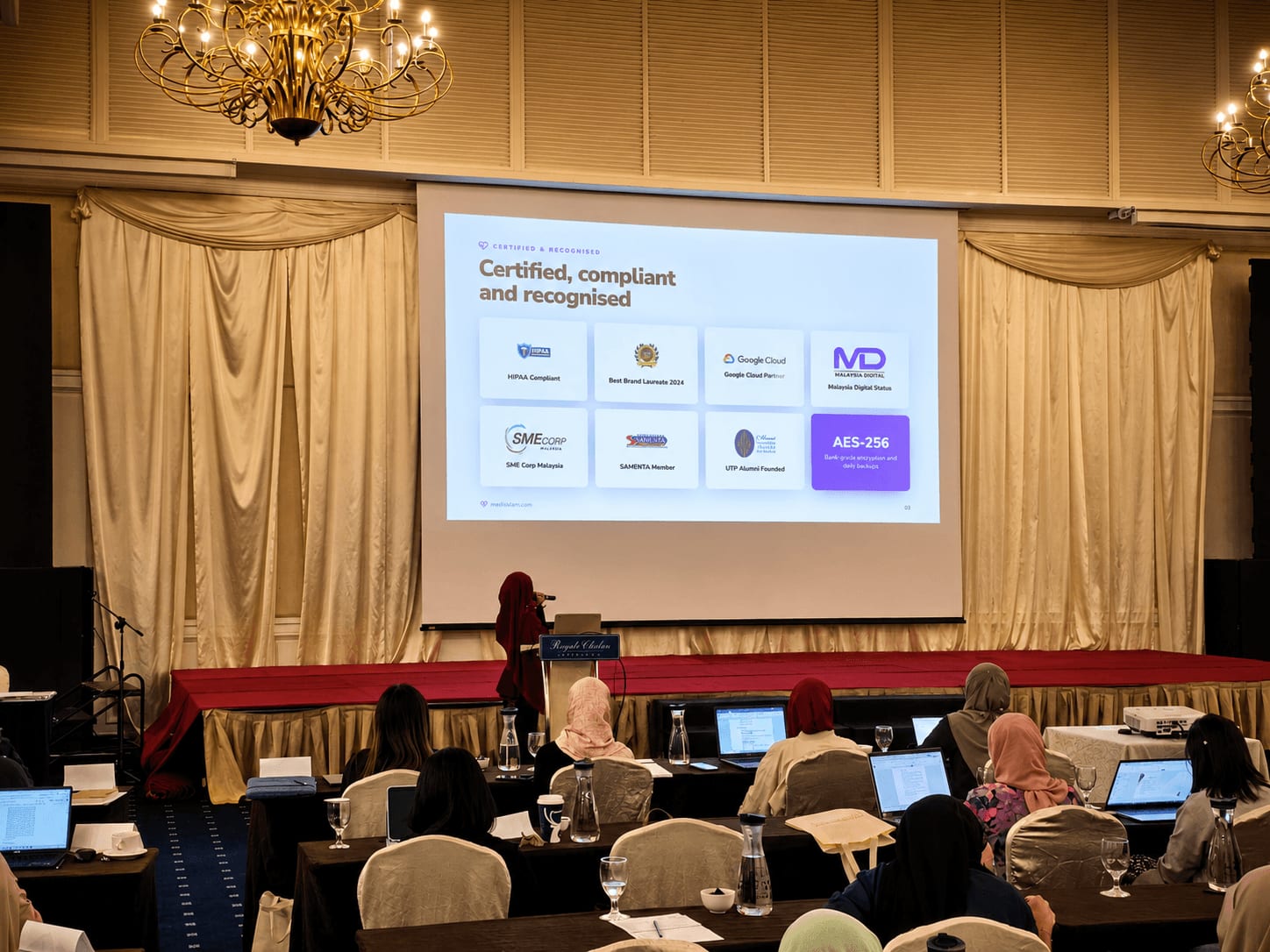
The compliance slide got a similar reaction. Doctors are personally accountable for patient data, so they are right to ask where it sits and how it is protected. We run AES-256 encryption with daily backups on Google Cloud, and we are happy to be asked about it — you can read the detail on our security page. Today MedicalMet supports more than 300 clinics and over 5,000 healthcare professionals, and 98% of our customers stay with us (MedicalMet internal data, August 2026).
Thank You, UniKlinik Group
Thank you to the UniKlinik Group for inviting us to contribute on 14 August, and for running a programme that takes the unglamorous parts of clinic ownership seriously — stock, records, compliance, systems. Nine days is a serious commitment from everyone who attended, and by the time we arrived on day seven the standard of questions from the floor showed it. Thank you also to the participants who queued at our booth to argue with us about their own edge cases. Those conversations end up in the product.
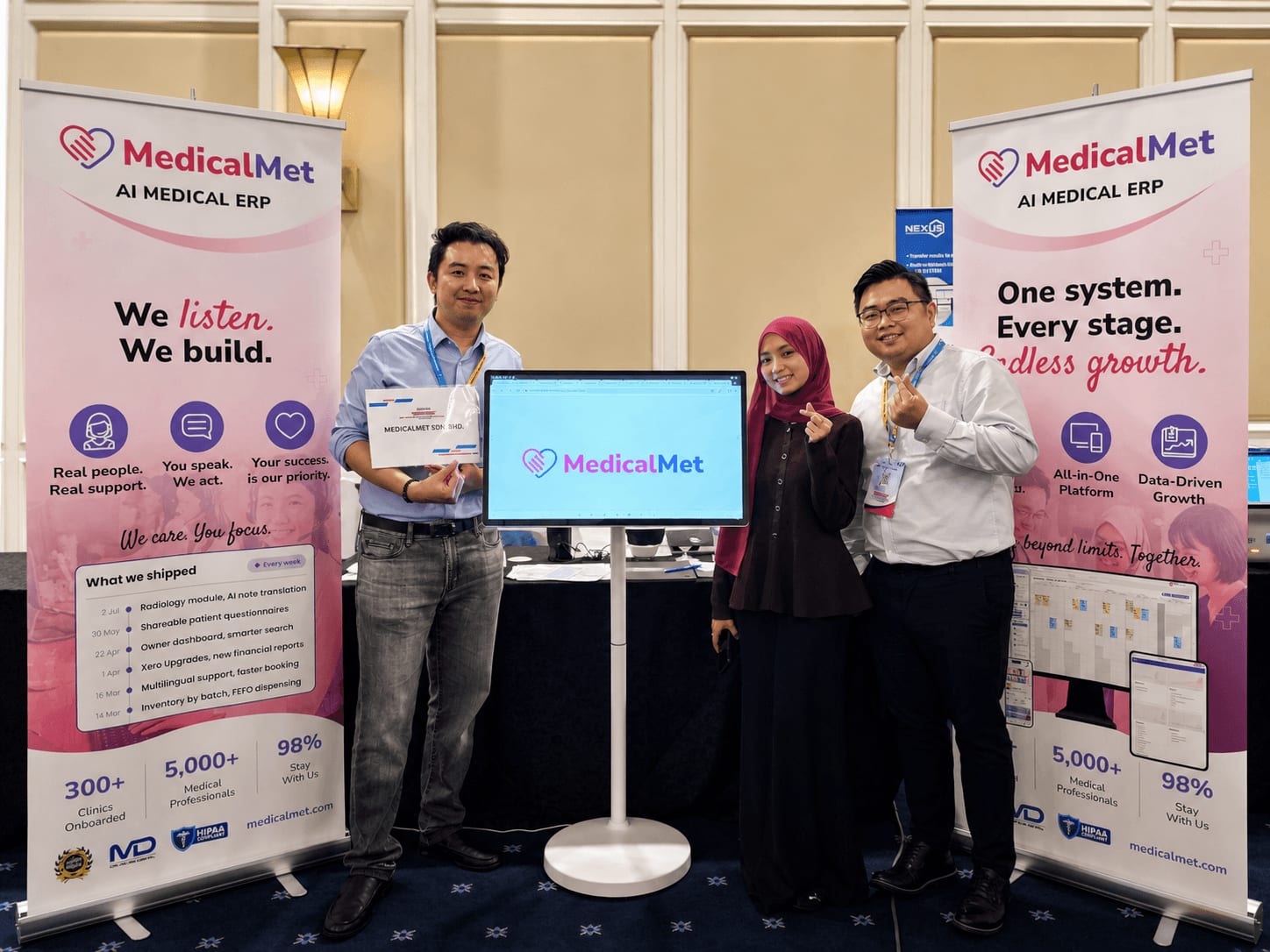
If you were in the room and want the checklist applied to your own clinic plan — solo, multi-branch or specialist centre — the offer we made on stage stands. Send us your scenario and we will tell you honestly whether we are the right fit for it.

Cedric Lau
Business Development Manager, MedicalMet