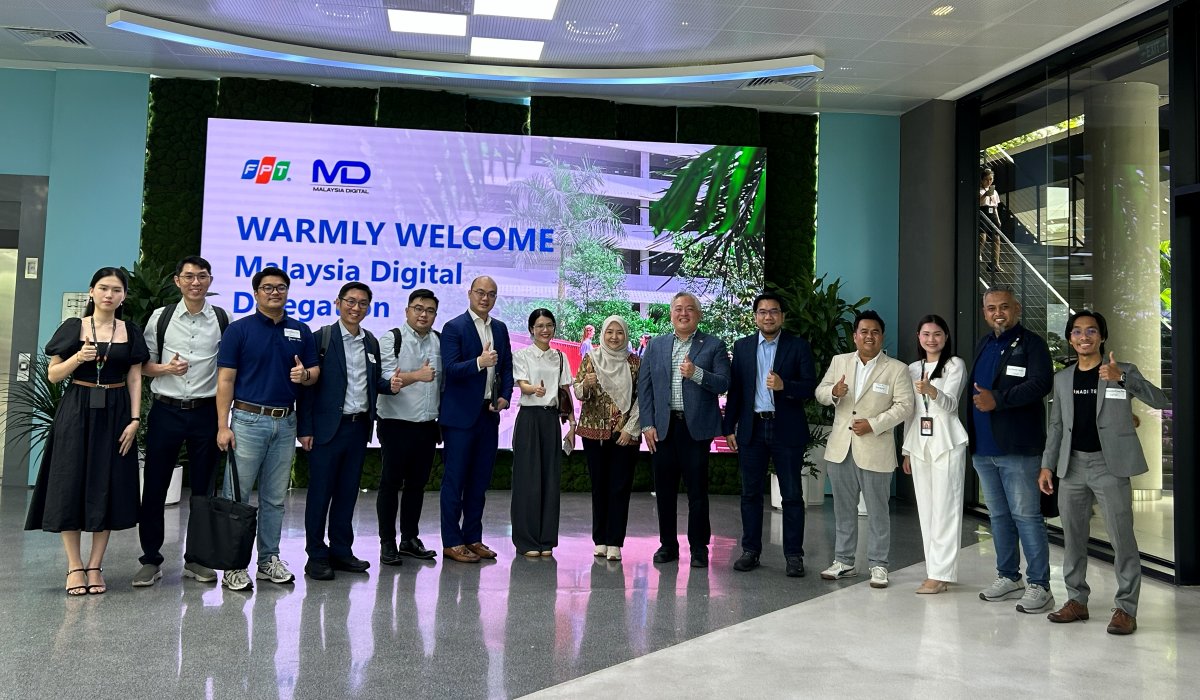
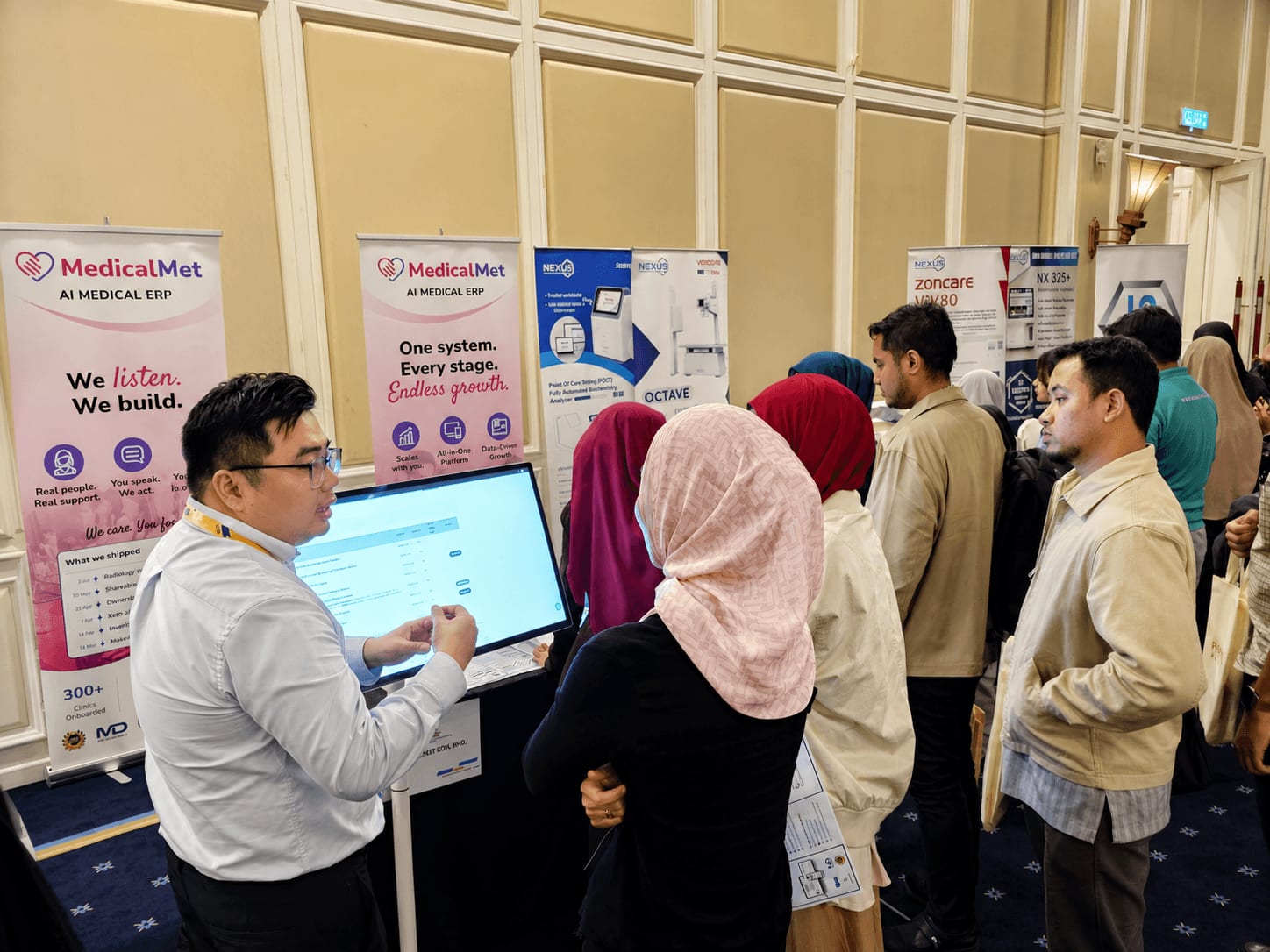
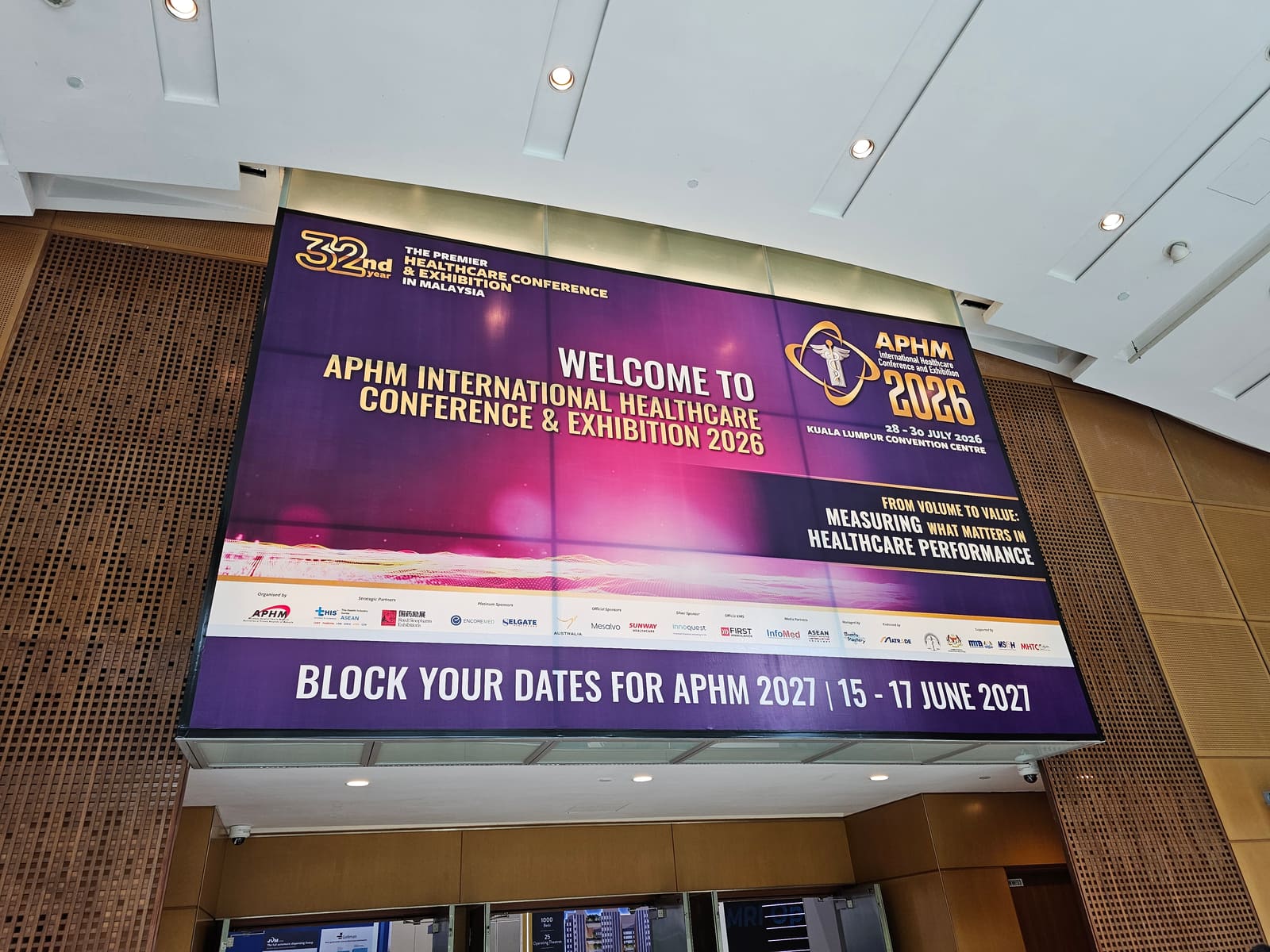
We were at APHM 2026 — the APHM International Healthcare Conference and Exhibition — at the Kuala Lumpur Convention Centre on 28 July 2026. Now in its 32nd year, it is the premier healthcare conference and exhibition in Malaysia, organised by the Association of Private Hospitals of Malaysia and running from 28 to 30 July 2026. We did not go to sell. We went to look at the latest technology in the industry — hardware, utilities, consumables, equipment, machines, software and AI — and to learn from healthcare vendors and operators from all over the world, including the United States, Singapore, Malaysia and China. This year's theme was "From Volume to Value: Measuring What Matters in Healthcare Performance."
What Is APHM 2026?
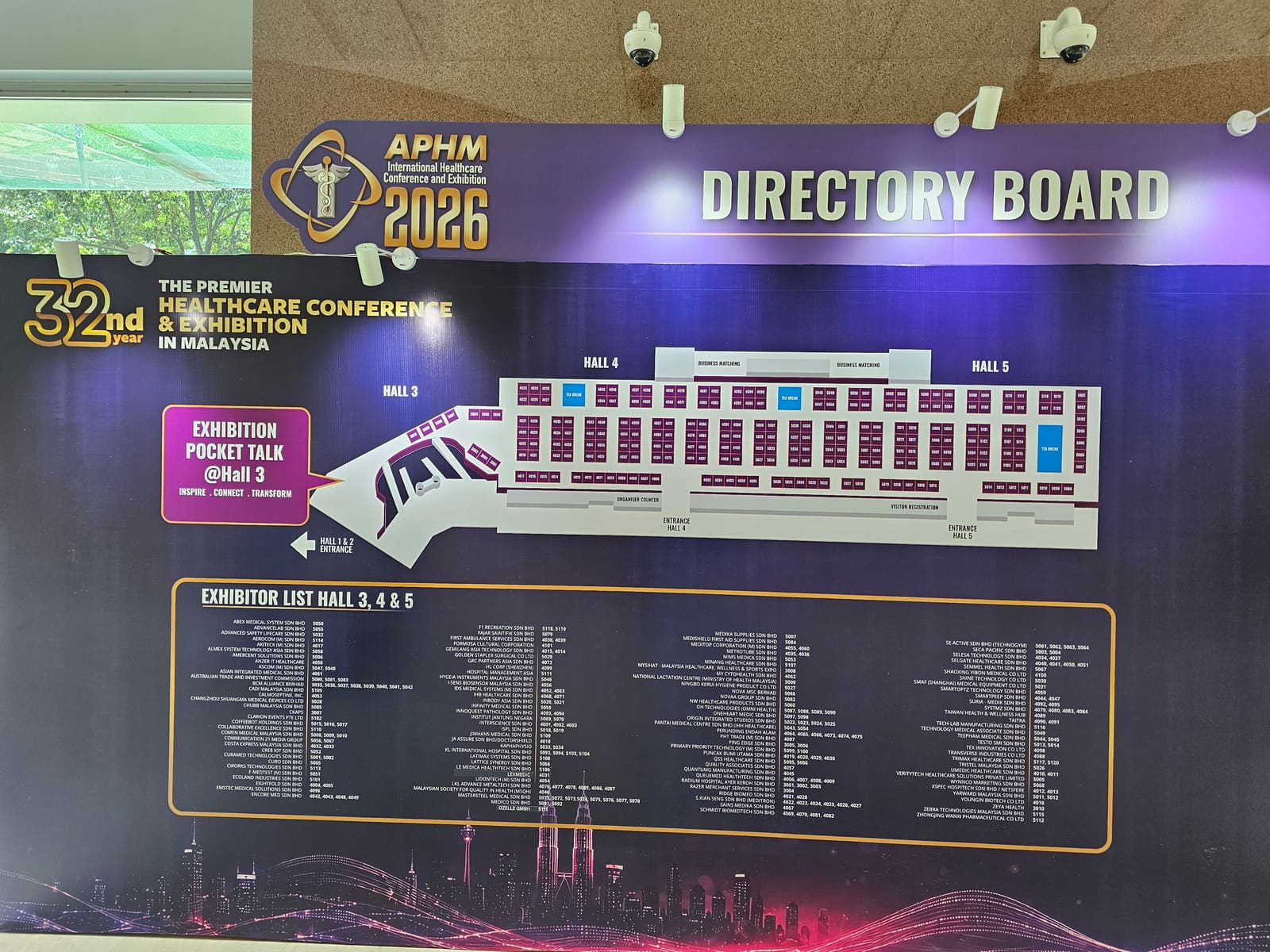
APHM 2026 is the 32nd edition of the APHM International Healthcare Conference and Exhibition, held 28–30 July 2026 at the Kuala Lumpur Convention Centre. Conference sessions ran in Conference Halls 1, 2 and 3 on Level 3. The exhibition filled Halls 3, 4 and 5 on the ground floor, with an Exhibition Pocket Talk stage in Hall 3 under the tagline "Inspire. Connect. Transform." The event is endorsed by MATRADE and supported by MSQH and MHTC. The room is private hospital owners, medical directors, quality and accreditation managers, biomedical and IT teams, procurement leads, and the vendors who supply all of them. For anyone building technology for this industry, three days in these halls is worth a quarter of desk research.

APHM 2026 at a glance
- Dates: 28–30 July 2026
- Venue: Kuala Lumpur Convention Centre (KLCC)
- Conference: Conference Hall 1, 2 & 3, Level 3
- Exhibition: Hall 3, 4 & 5, Ground Floor
- Exhibition Pocket Talk: Hall 3, Ground Floor
- Theme: From Volume to Value — Measuring What Matters in Healthcare Performance
- Next edition: APHM 2027, 15–17 June 2027
What Did We Go to APHM 2026 to Learn?
Healthcare is a legacy industry. That is not an insult — it is a fact of how hospitals are built. Equipment is bought to last fifteen years. Protocols are written to survive staff turnover. Nothing gets adopted because it is new. So when we build for this industry, we cannot guess at what a hospital floor actually runs on. We have to go and look at it.
Halls 3, 4 and 5 held hundreds of exhibitors, and we walked all three. Medical devices, diagnostics, laboratory systems, consumables, hospital furniture, facilities and utilities, sterilisation, rehabilitation equipment, and a fast-growing block of health IT and AI. Vendors came from Malaysia and Singapore, from China, Taiwan and Korea, from Australia, Europe and the United States. Seeing that range in one place tells you something a product roadmap cannot: which technology is already standard practice somewhere else in the world, and how far behind the average clinic in our region still is.
What we came to look at
- Hardware and machines — what clinics and hospitals are actually buying in 2026, and what those machines can output.
- Diagnostics and laboratory equipment — sample handling, analysers, and the data they produce at the end of a run.
- Utilities and consumables — the unglamorous supply chain that every ward depends on and every stock report gets wrong.
- Software and hospital IT — what other vendors are shipping, and where the gaps still are.
- AI and models — what is real and deployed, versus what is still a demo on a booth screen.
Which Hospital Equipment Should Talk to Your Clinic System?
This was the main reason we came. We spent most of the day in conversations with potential partners about hardware integrations and the wider ecosystem — equipment makers, machine suppliers, device distributors and AI model providers. The question we kept asking was simple: what does your machine output, and can we read it?
These were exploratory conversations, not shipped features, and we want to be clear about that. But the categories we discussed give a good picture of where connected hospital operations are heading.
- Networked lab fridge and cold-chain temperature monitoring — continuous logging instead of a clipboard on the door, with alerts before vaccines and reagents are lost.
- Home care devices — patient-side devices that upload over Wi-Fi and sync back into the clinic management system, so a follow-up consultation opens with real readings from the weeks in between instead of the patient trying to remember.
- Ward bed and triage ANDON boards — the call and status panels above a bed and over a triage area. Today they are usually a closed loop between a button and a light, when the status they carry is exactly what the nurse station, the queue screen and the discharge planner all need.
- Bed labelling and identification — so the physical bed, the label on it and the bed record in the system are all the same bed. That sounds trivial until a ward transfer, a census count or a billing query depends on it.
- DNA sequencers and genomic workflows — order in, result back, attached to the right patient record without a re-typing step.
- Vital signs monitoring — heart rate, blood pressure and other observations flowing into the record instead of being copied off a screen by hand.
- Point-of-care testing — glucose, cholesterol and similar bedside devices writing their readings straight into the patient timeline.
- AI models — imaging, triage and documentation models that can be called from inside a clinical workflow rather than run as a side tool.
Everything Is Split — Our Vision Is to Link It Together
One pattern ran through every single conversation, and it is the reason we keep coming back to events like this: everything is split. The fridge has its own logger. The ANDON board has its own controller and its own wiring. The analyser has its own vendor portal. The monitor has its own screen. The bed carries a label that matches nothing else in the building. Every box works, and every box works alone.
So the staff become the integration layer. A nurse reads a number off one screen and types it into another. A ward clerk reconciles a bed list against a whiteboard. A doctor asks a patient to recall six weeks of home readings that a device already recorded perfectly. None of that is clinical work, and all of it is where errors get in.
Our vision is to link them all together. One patient record, one timeline, one operational picture — where the fridge alert, the bed status, the triage board, the analyser result and the home device reading all arrive on their own. Not another screen to check. Fewer screens, because the data finally comes to the one that is already open.
None of this is theoretical for us. We already run device and standards-based integration in production: MedicalMet radiology (RIS) orders flow through AdvaPACS to the modality and back as DICOM with a structured report, on HL7 and FHIR. Our integrations library covers accounting, payments and messaging in the same way. Extending that pattern to fridges, analysers, monitors and sequencers is engineering work, not a leap of faith — the hard part is agreeing with the manufacturer on how the data gets out.
A machine reading is only useful where the clinician is already looking
Most hospital equipment can already export data. The failure is downstream: the reading lands in a vendor portal, a USB export or a printout, so a human re-types it into the patient record — or does not. Any integration worth building must end inside the record the clinician has open, not in a second system they have to remember to check.
“The technology already exists. It is in these halls — in the machines, in the models, in the software. The real work is getting it into the hands of a nurse on a night shift without adding one more login, one more form, one more thing to remember.”
— Eddy Goh, CTO, MedicalMet
What We Learned From the Market Leaders
We also sat in on the talks. The value of the conference programme is hearing operators who run large hospital groups describe problems at a scale most software vendors never see — workforce shortages, standardising practice across many sites, capital planning, and the pressure to show measurable outcomes rather than just activity. That is what the 2026 theme, "From Volume to Value," was pointing at. You cannot report a value you never recorded, and most of the recording still happens by hand.
What the BFHI stand told us about hospital data
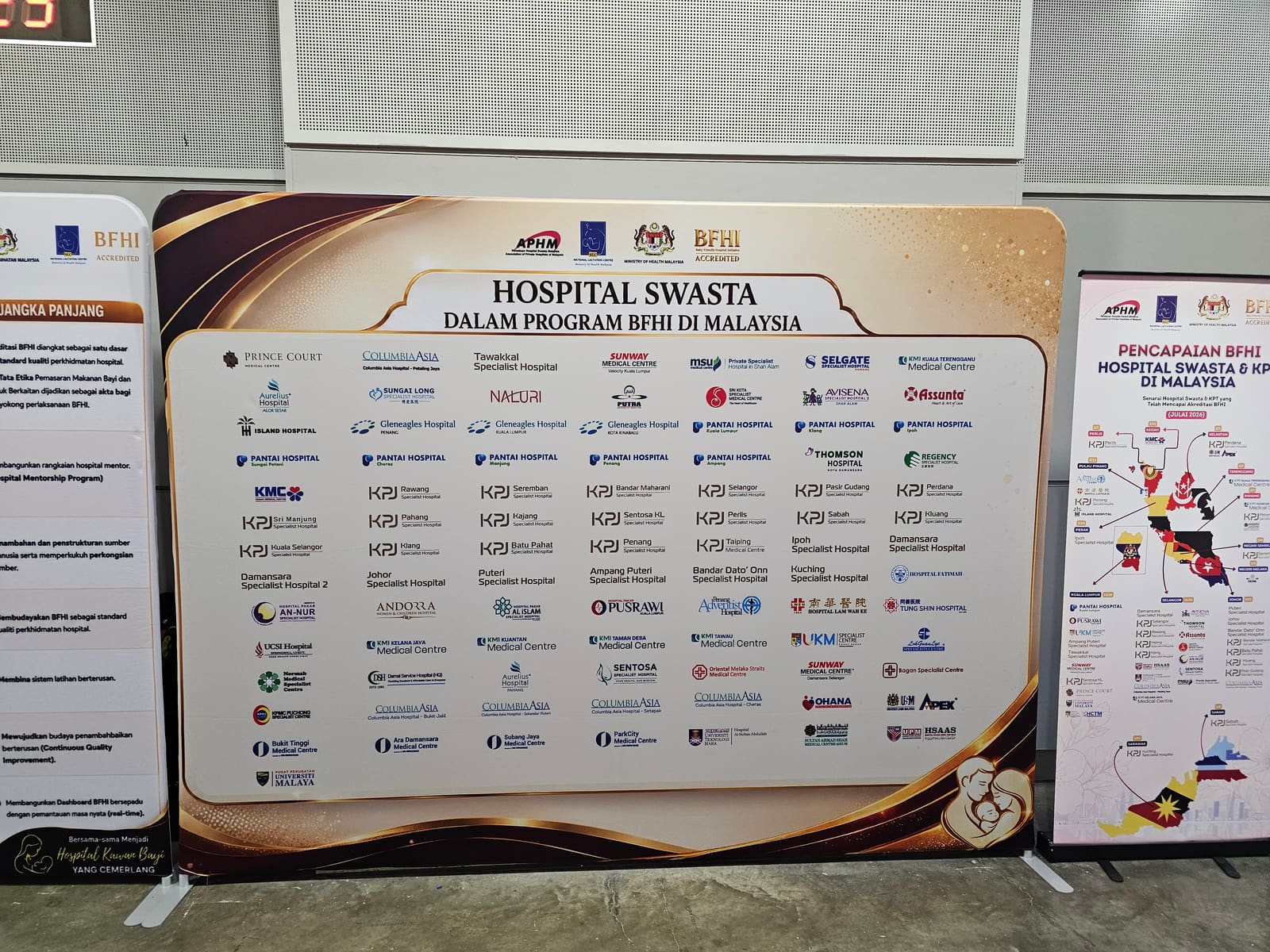
The clearest example we saw all day had nothing to do with software. APHM, the National Lactation Centre and the Ministry of Health Malaysia were jointly showcasing the Baby-Friendly Hospital Initiative (BFHI) programme. One wall listed every private hospital currently in the programme — a long roll call spanning the major groups and independent specialist centres across Peninsular Malaysia, Sabah and Sarawak.
The banners next to it were more interesting than the roll call. They tracked accreditation progress as at July 2026 — which hospitals are under BFHI mentorship, which are already in internal audit — and then listed plainly what is slowing the programme down. The monitoring ratio was shown as 9:1. Alongside it: limited manpower and logistics, uneven commitment between hospital managements, inconsistent staff knowledge caused by rotation and turnover, difficulty sustaining practice after the mentoring period ends, and progress data that takes a long time to collect.
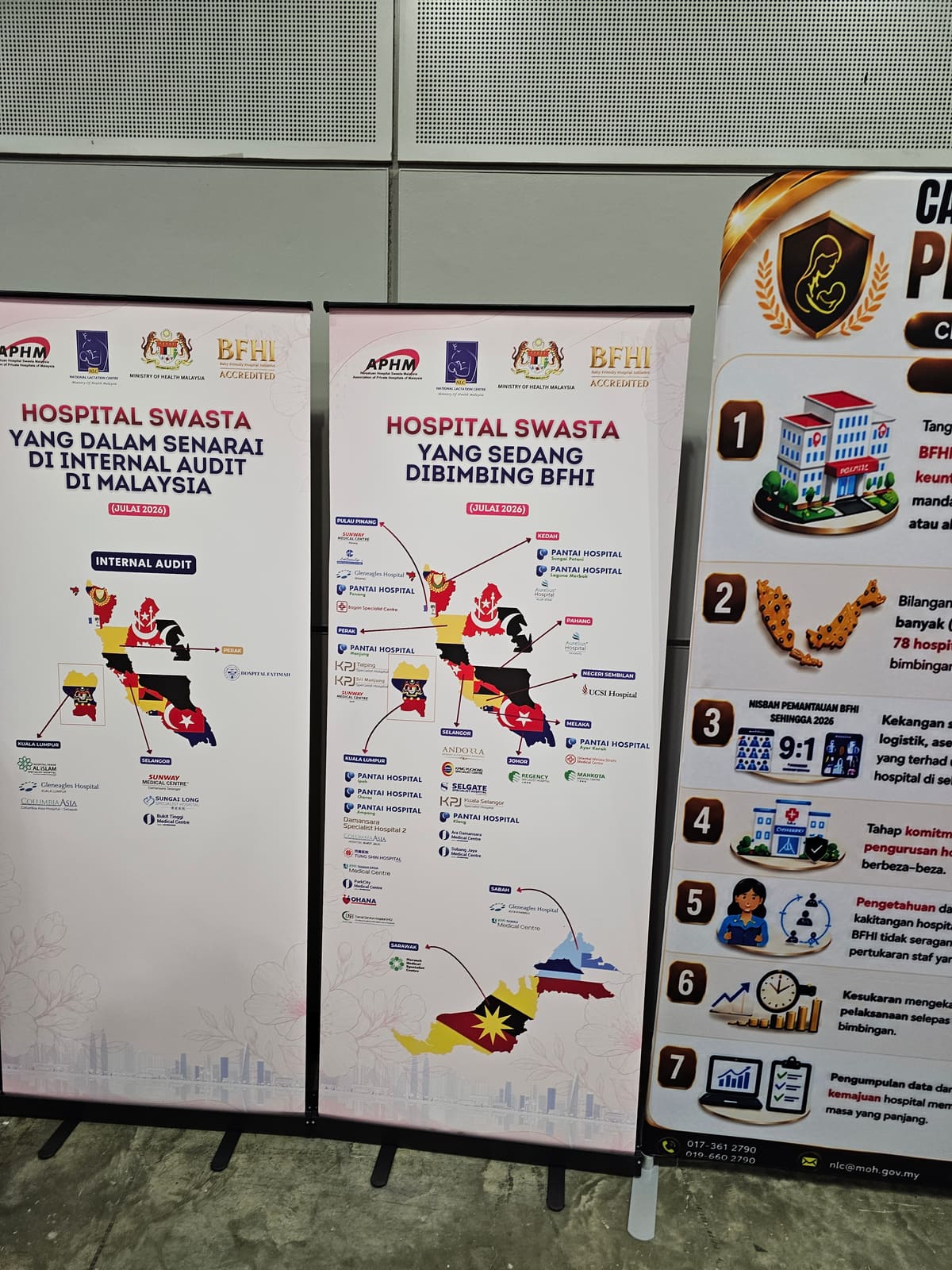
Look at that list again. Almost none of it is clinical. Knowledge lost when staff rotate out, standards decaying once the assessor leaves, progress data arriving too slowly to act on — those are systems problems, and they are exactly the problems software is supposed to solve. A hospital where the protocol lives in a shared folder loses ground every time a senior nurse transfers. A hospital where the protocol is built into the daily workflow does not. That is the same conclusion we keep reaching from the other direction, with structured records, AI-assisted notes and automatic reporting: capture it once, at the moment it happens, and the audit stops being a fire drill.
From Clinics to Hospitals: Where MedicalMet Is Going in Southeast Asia
We are clear about our position. MedicalMet is built to support the full range of healthcare providers in Southeast Asia — from a single-doctor clinic to a multi-department private hospital — across Malaysia, Singapore, Brunei, the Philippines, Thailand and Vietnam. That is the direction we are locked into, and days like this one are how we stay honest about it. Today more than 5,000 healthcare professionals in the region use MedicalMet, and our customers have processed over 10,000 voice-captured treatment notes to date (MedicalMet customer data, 2026).
The practical shape of that is one platform that grows with the provider rather than three migrations along the way.
- A small clinic starts with scheduling, records, billing and WhatsApp reminders — which cut no-shows by up to 90% (MedicalMet customer data, 2026).
- A growing group adds queue management, insurance panel pricing, LHDN e-Invoice and multi-location reporting.
- A hospital moves onto the MedicalMet hospital information system — admissions, wards, departments, pharmacy, laboratory and radiology on one spine.
- Device and AI integrations sit underneath all three — so a reading taken at the bedside, in the lab, on a ward board or on a patient's own home device ends up in the record without anyone re-typing it.
And the point of all of it is not the software. It is that doctors, nurses, allied health practitioners and hospital staff get to work with current technology instead of being stuck a decade behind it — in their day-to-day work, serving their community and the people in front of them. Bringing new technology into a legacy industry is slow, unglamorous work. It is the work we signed up for.
Building or supplying hospital equipment? Talk to us
If you make or distribute clinical hardware, laboratory equipment, monitoring devices or AI models and you want it connected to the clinics and hospitals already running MedicalMet, we want the same conversation we were having at APHM. Reach us through the contact page and tell us what your device outputs.
Thank You, APHM — See You in 2027
Thank you to the Association of Private Hospitals of Malaysia for a genuinely useful three days, to the exhibitors who took the time to explain their equipment to a software team, and to the speakers who put hard problems on the main stage instead of comfortable ones. We came away with a longer integration list than we arrived with, which is the best outcome we could have asked for. APHM 2027 is set for 15–17 June 2027 at KLCC. Our dates are already blocked.

Eddy Goh
CTO, MedicalMet