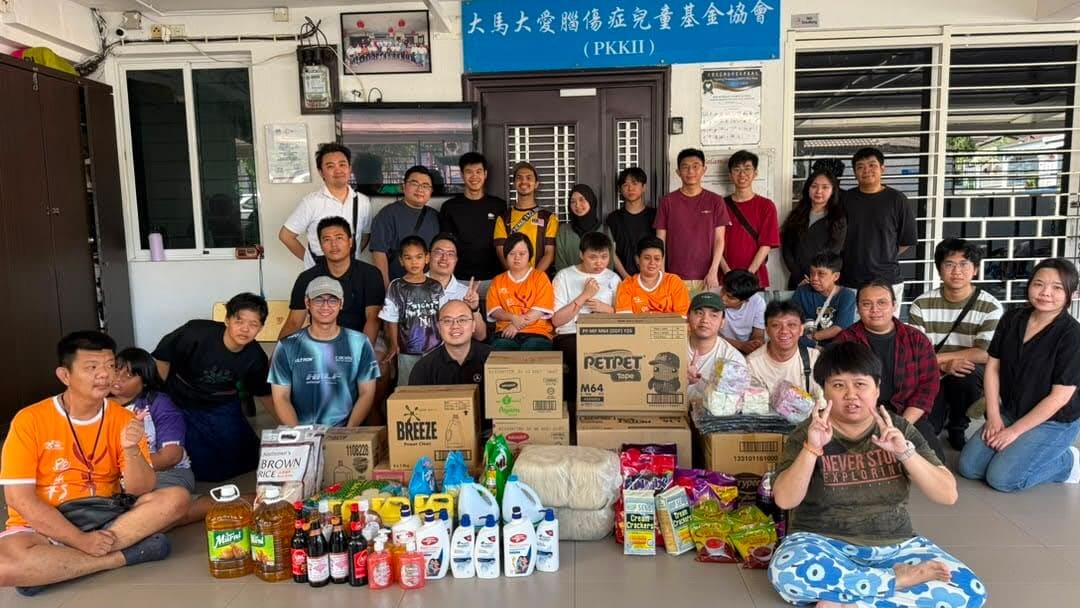
On Saturday, 15 August 2026 at 10:00am, the MedicalMet team turned up at 大爱之家 in Happy Garden, Kuala Lumpur for a CSR charity visit — the home run by Persatuan Kebajikan Kanak-Kanak Istimewa Insan (PKKII). It was not a photo drop. We brought rice, cooking oil, pampers, soap, detergent, biscuits and drinks, unloaded the boxes, then stayed four hours to play musical chairs, dance, and sit and talk with the residents. We walked out barefoot, sweaty, and quieter than when we arrived.
What Is Persatuan Kebajikan Kanak-Kanak Istimewa Insan (PKKII) in Happy Garden?
Persatuan Kebajikan Kanak-Kanak Istimewa Insan (PKKII) — the full registered name is Persatuan Kebajikan Kanak-Kanak Istimewa Insan Wilayah Kuala Lumpur dan Selangor — is a welfare association running a residential home for children and adults with special needs, many of them living with brain injury conditions. Locally it is known as 大爱之家, and the Chinese signboard above the front door reads 大馬大愛腦傷症兒童基金協會 (PKKII). It sits in a shoplot-style building on Jalan Riang 6 in Happy Garden, off Jalan Kuchai Lama, in a part of Kuala Lumpur you could drive past a hundred times without noticing.
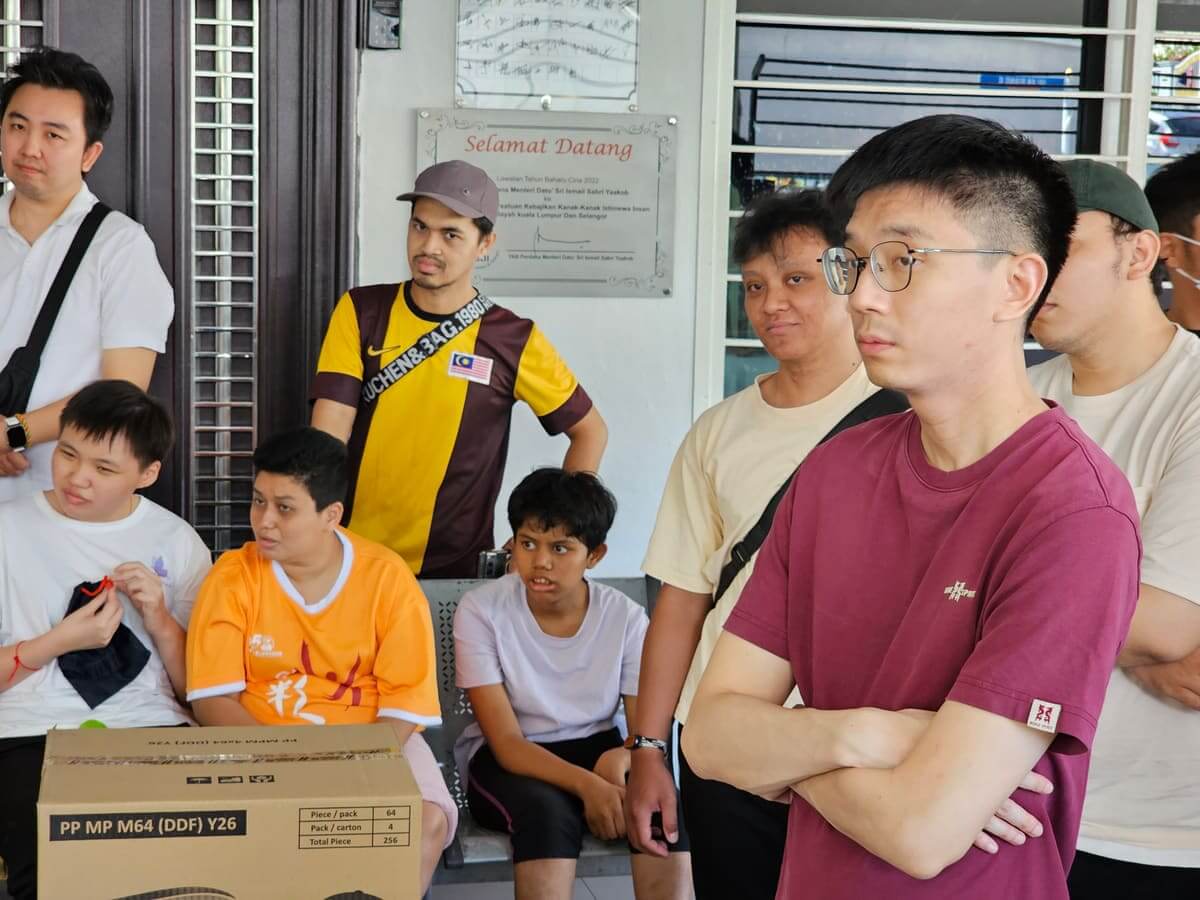
Around 60 residents live here, aged roughly 8 to 40. That range is not a coincidence. Most of the older residents arrived as children — some at 10 years old — and are still here in their thirties and forties, because there is nowhere else for them to go. We were told to expect a shy room. That is not what we got. Within ten minutes, people were holding our hands, showing us their toys, asking our names and asking again.
The visit at a glance
- Date: Saturday, 15 August 2026
- Time: 10:00am, about four hours on site
- Home: 大爱之家 — Persatuan Kebajikan Kanak-Kanak Istimewa Insan (PKKII), Wilayah Kuala Lumpur dan Selangor
- Address: 624, Jalan Riang 6, Happy Garden, 58200 Kuala Lumpur
- Residents: around 60 children and adults, roughly 8 to 40 years old
- Brought: rice, cooking oil, diapers, soap, detergent, canned food, biscuits, drinks
- Did: unloaded supplies, musical chairs, dancing, sat and talked
Who Actually Runs the Home?
A handful of brothers and sisters who have been doing it for decades. Some of the caretakers we met have been in this home for more than 20 years, looking after the same residents from childhood into adulthood. There is no shift rotation of specialists here. It is the same few people, every day, for a very long time.
We asked the question everyone thinks and nobody says out loud: how do you manage when a resident cannot control themselves? The answer was not a technique or a programme.
“You get used to it. You need patience. You find ways to manage each one and take care of them properly.”
— Caretaker at 大爱之家 (PKKII), Happy Garden
That is 20 years of experience compressed into three sentences. No jargon, no framework — just people who decided to stay.
What Do Special Needs Homes in Malaysia Actually Need?
Boring things. Things that get used up. We asked the caretakers before we shopped, which is the single most useful thing any company can do before a charity visit. The answer was not toys or hampers. It was consumables — what a home buys every week and never stops buying.
Here is the number that stayed with us: the home goes through at least 450kg of rice a month to feed around 60 residents. When the rice supply runs low, portions get smaller. The residents told us that themselves. They know exactly what a short month feels like.
- Rice — 450kg or more every month, bought by the sack, never the packet
- Raw food and dry goods — cooking oil, condiments, canned food, biscuits, drinks
- Diapers and pampers — the biggest recurring cost in a home with non-ambulant residents, in both child and adult sizes
- Soap, shampoo, toothpaste and detergent — bathing and laundry for 60 people, daily
- Second-hand clothes — they need a lot of them, because some residents tear their clothes during episodes they cannot control. Used clothing in decent condition is genuinely welcome here
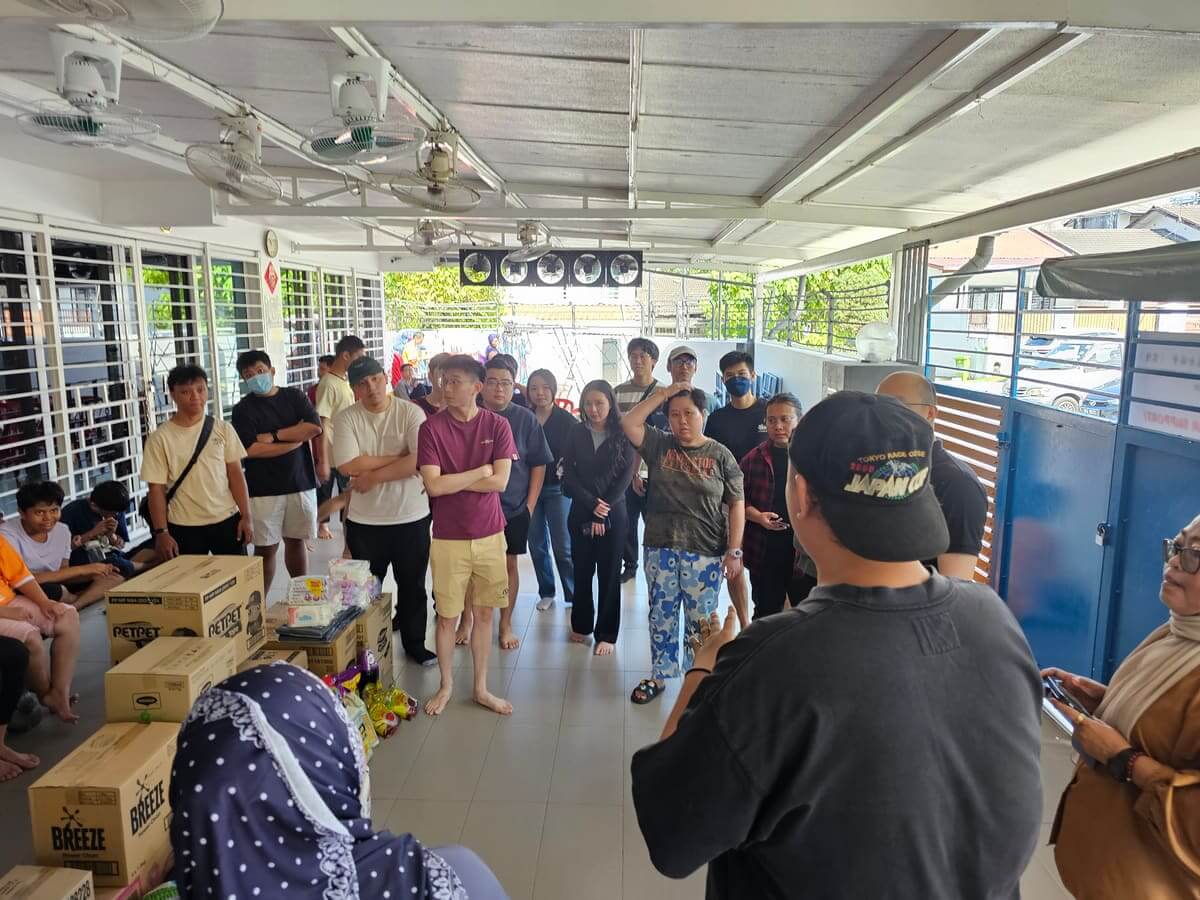
A hamper looks good in a photo. A sack of rice or a carton of adult diapers takes real pressure off caretakers doing the maths at the end of the month. If your clinic or company is planning a visit, ask the home for their list and buy from it, even if the list is unglamorous.
Want to donate to PKKII in Happy Garden? Contact them directly
These are the home's own contact details, not ours. 大爱之家 — Persatuan Kebajikan Kanak-Kanak Istimewa Insan (PKKII)
Address: 624, Jalan Riang 6, Happy Garden, 58200 Kuala Lumpur
Phone: +603-79824502
Mobile / H/P: 016-2622737
Rice, raw food, diapers, cleaning supplies and second-hand clothes are all needed. Call first and ask what is short this month.
Call the home before you shop
One phone call to the caretaker changes what you buy. Homes know exactly what they are short of this month, and it is almost always rice, diapers or cleaning supplies — not gifts.
Musical Chairs, Dancing and Four Hours of Nothing Else
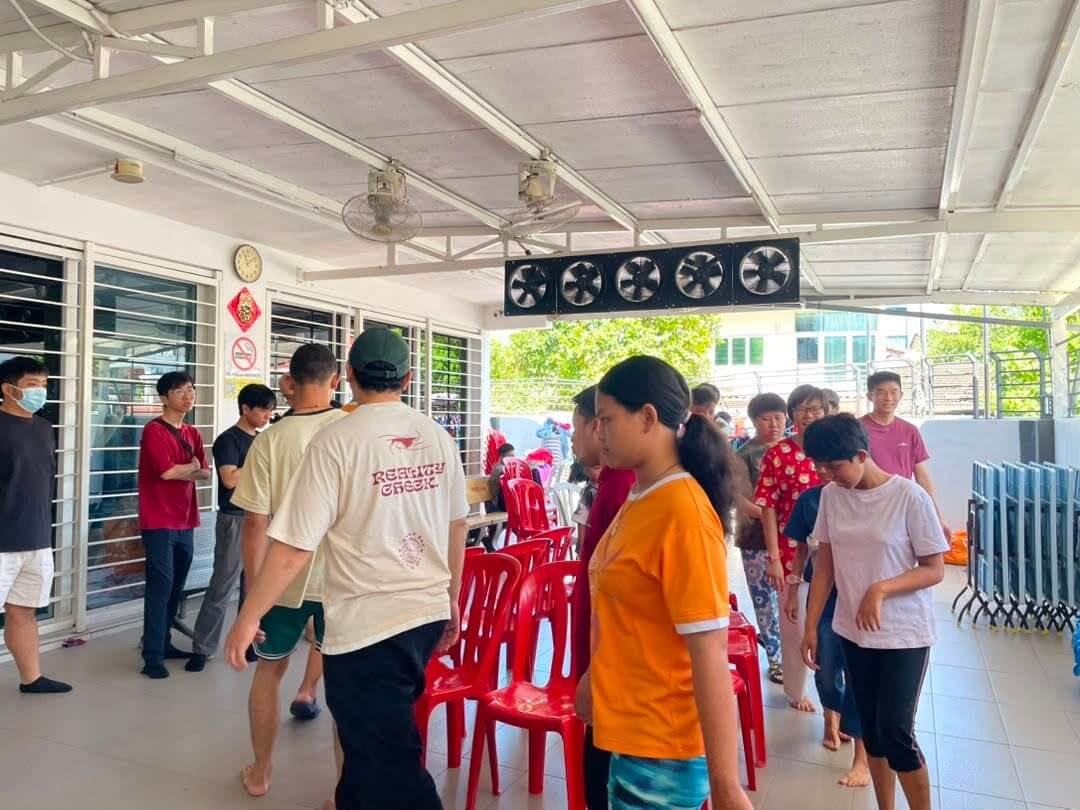
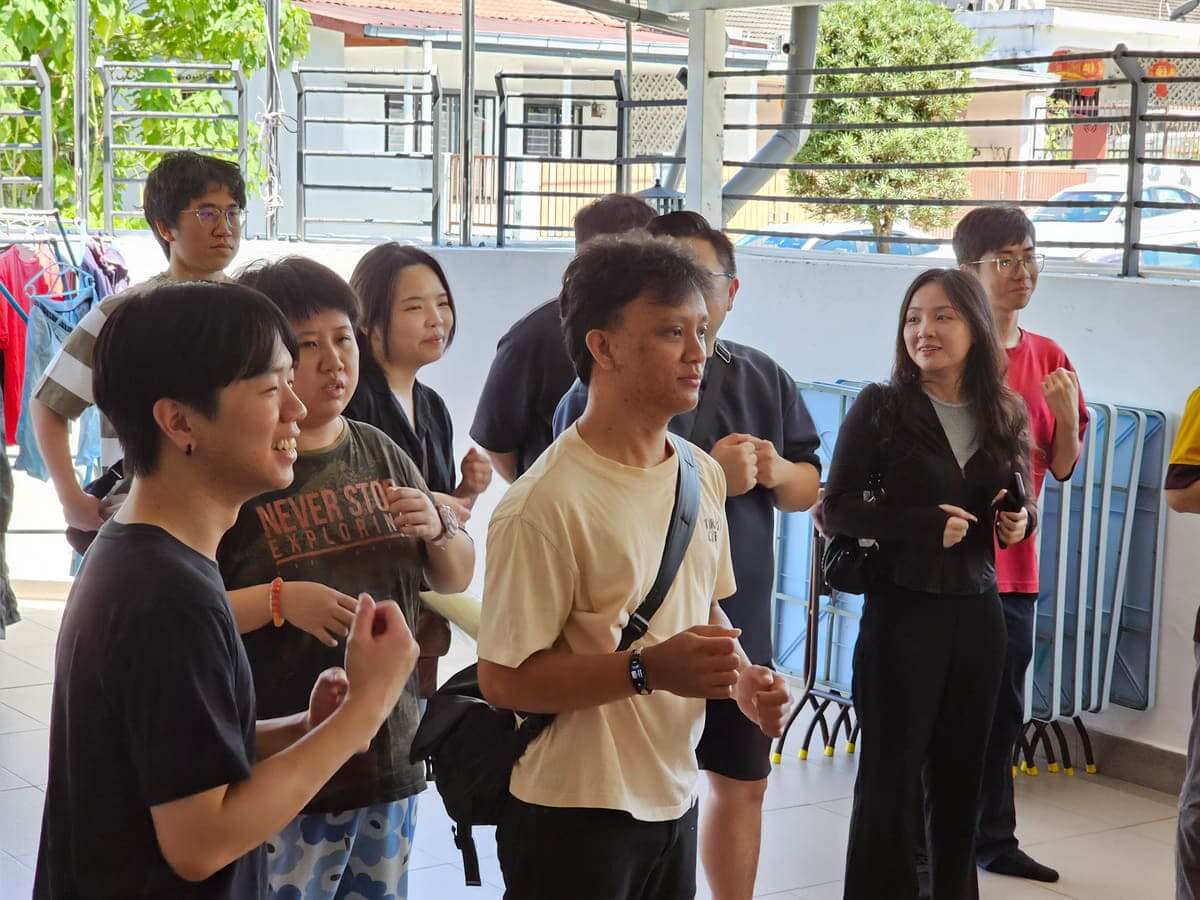
Once the supplies were in, we pushed the chairs into the middle of the hall and played musical chairs. Nobody explained the rules very well. It did not matter. The residents knew the game better than we did, and they play to win — one of them cleared out three of our colleagues in a single round and made sure everybody saw it.
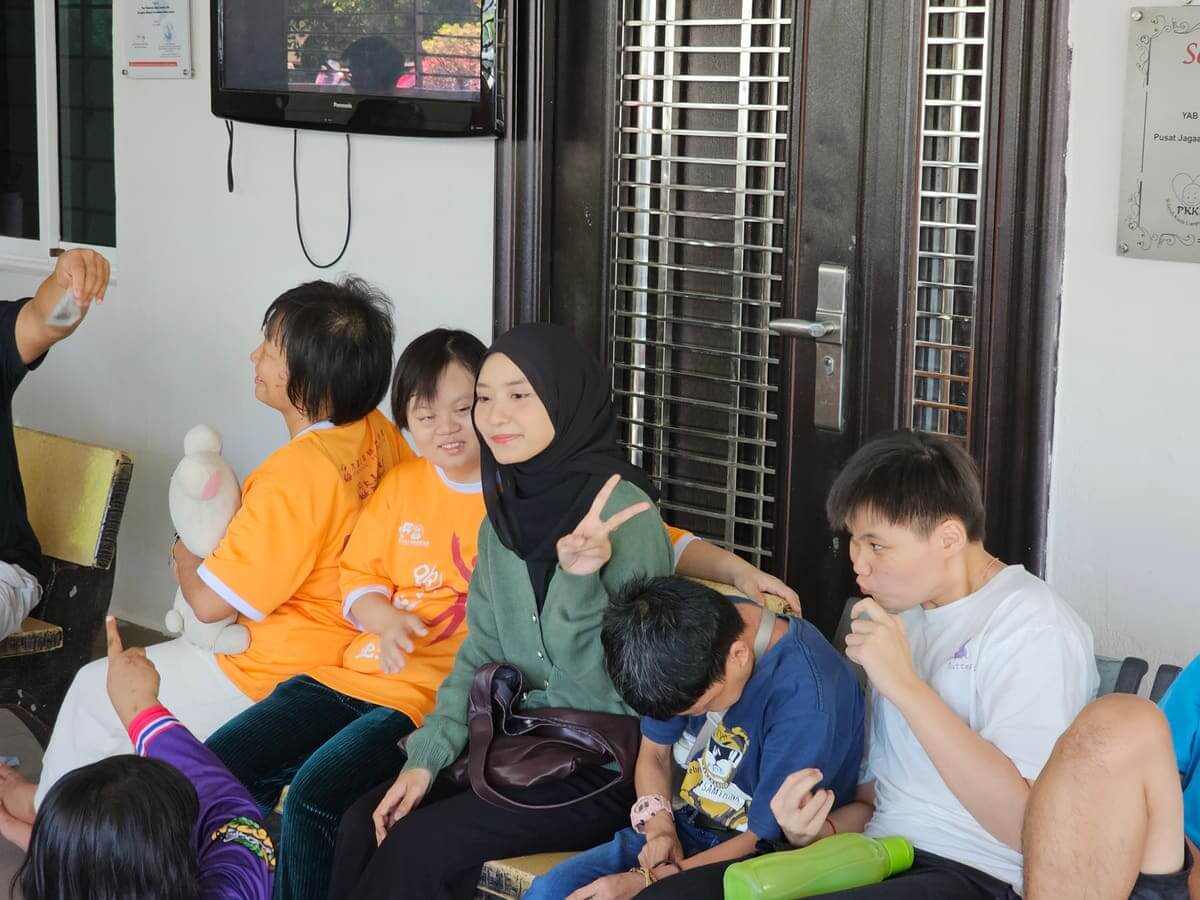
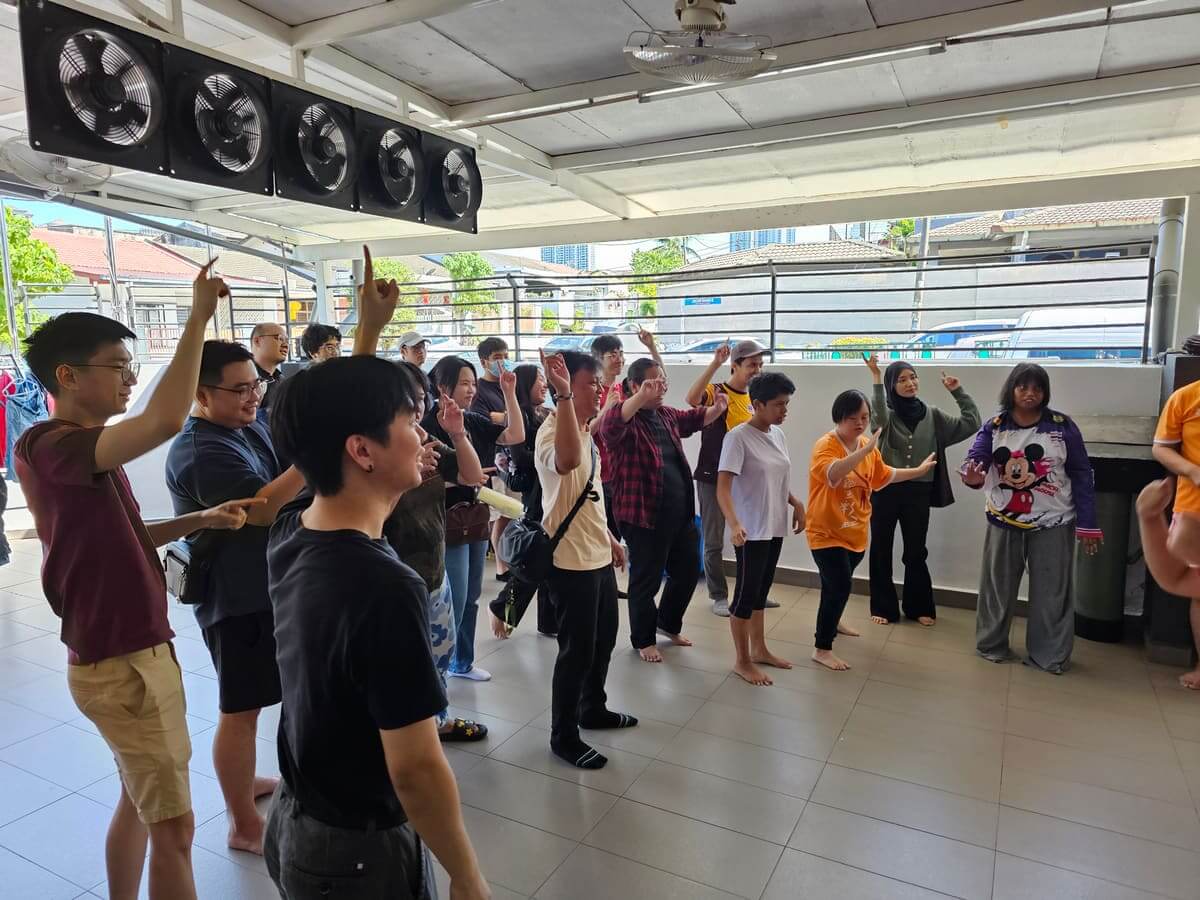
Then came the dancing. Someone put music on the speaker, one of the residents started a routine he clearly knew by heart, and the room followed — arms up, pointing, spinning, everyone barefoot on the tiles. Our team learned the moves badly and got corrected, loudly, by a kid a third of their age.
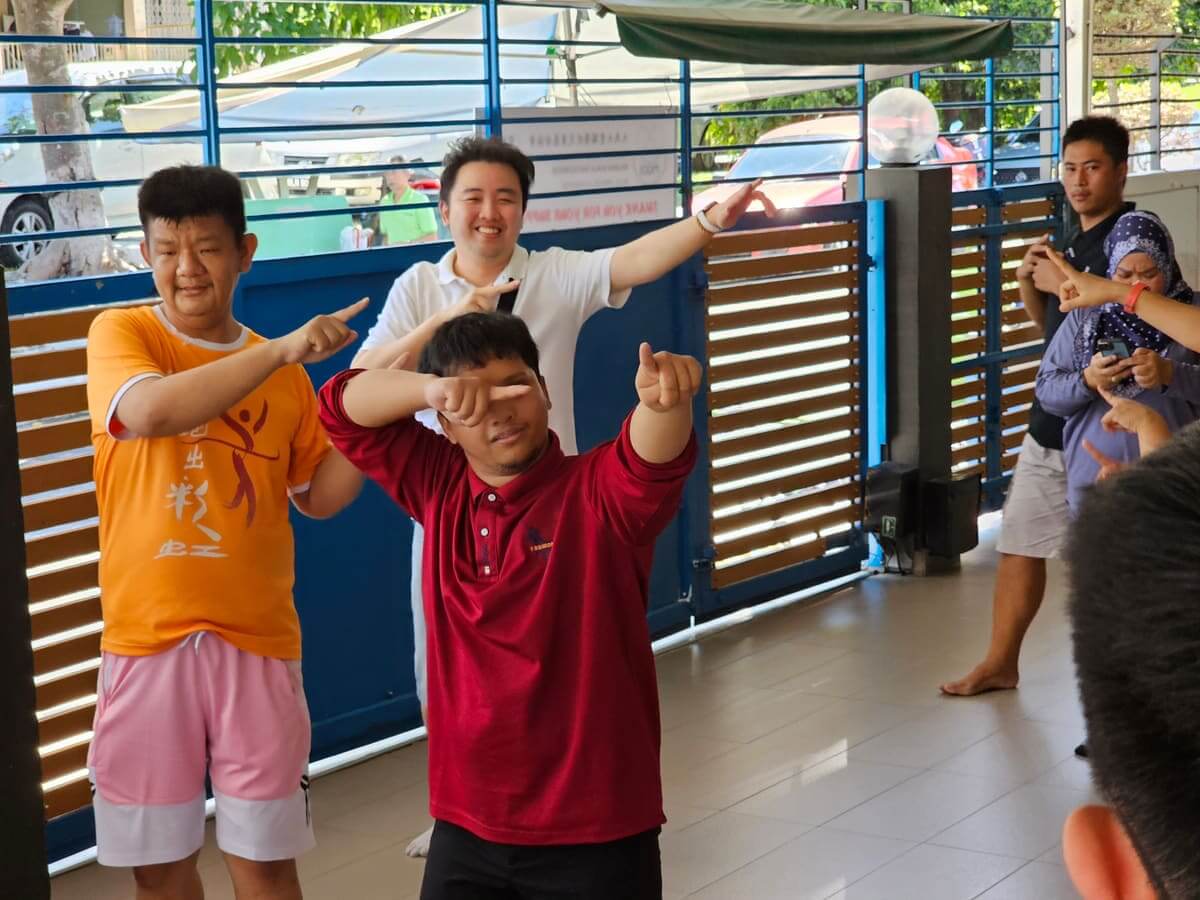
The rest of the four hours we sat and talked. That part is harder to photograph and it is the part that sticks. Some residents speak clearly, some do not speak at all, and a few communicate by taking your hand and leading you somewhere. All of them were friendly. All of them wanted attention, and there is only so much of it to go around on an ordinary weekday when there are no visitors.
“You can build healthcare software for years and still forget that care is physical. Someone lifts, feeds, changes and sits with these residents every day, and no dashboard does that part.”
— MedicalMet team, after the 15 August 2026 visit
Why Does a Healthcare Software Company Do a CSR Visit?
We spend our week building for clinics, medical centres and NGO-led care programmes — the kind of operations behind our special and niche clinic software, and the therapy and rehab providers we work with through physiotherapy clinic software. Most of that work happens on screens. It is easy to start thinking of a care operation as a set of records, appointments and invoices.
Four hours in a home like this resets that. You notice the laundry racks, the wall of medication, the caretaker tracking 60 residents in a notebook, the fans running because the hall is hot. It is a useful reminder of who sits on the other side of the software — and it landed the day after our team was at the UniKlinik Incubator 2026 talking to doctors about growth. Same week, two very different rooms.
How Do You Organise a CSR Visit to a Home in Malaysia?
Easier than most teams assume, and it does not need a budget line or a committee. This is roughly what we did, and what we would repeat.
- Find a home near your office. Registered welfare associations are all over the Klang Valley. Proximity matters, because it makes a second visit likely.
- Call and ask two questions. What do you need, and when is a good time? Homes run on routines — meals, naps, therapy sessions. Fit around them.
- Buy from their list. Split the shopping across the team. Bulk rice and dry goods from a wholesaler go much further than retail hampers.
- Block out half a day, not thirty minutes. We stayed four hours and it was the right amount. Dropping goods and leaving is a transaction. Staying is the point.
- Bring one simple activity. Musical chairs and music need nothing but a speaker and chairs, and everyone can join regardless of ability.
- Ask before you photograph. Get the caretakers' consent, and skip any shot you would not want taken of your own family.
- Set the next date before you leave. One visit is a nice morning. A group that comes back becomes something residents count on.
What We Are Taking Back to the Office
Not a slogan. Mostly a to-do list: go back, bring rice, and stop treating CSR as a once-a-year outing. Thank you to the brothers and sisters running 大爱之家 — Persatuan Kebajikan Kanak-Kanak Istimewa Insan (PKKII) — for letting a busload of strangers into your hall on a Saturday morning, and for doing this every other day of the year when nobody is taking photos.
If you can help, contact the home directly at 624, Jalan Riang 6, Happy Garden, 58200 Kuala Lumpur, on +603-79824502 or 016-2622737. Rice, raw food, diapers and second-hand clothes are all needed, every month. And if you are curious about what we do the rest of the week, our clinic management features page is the honest version of it.

MedicalMet Team
Official Blog