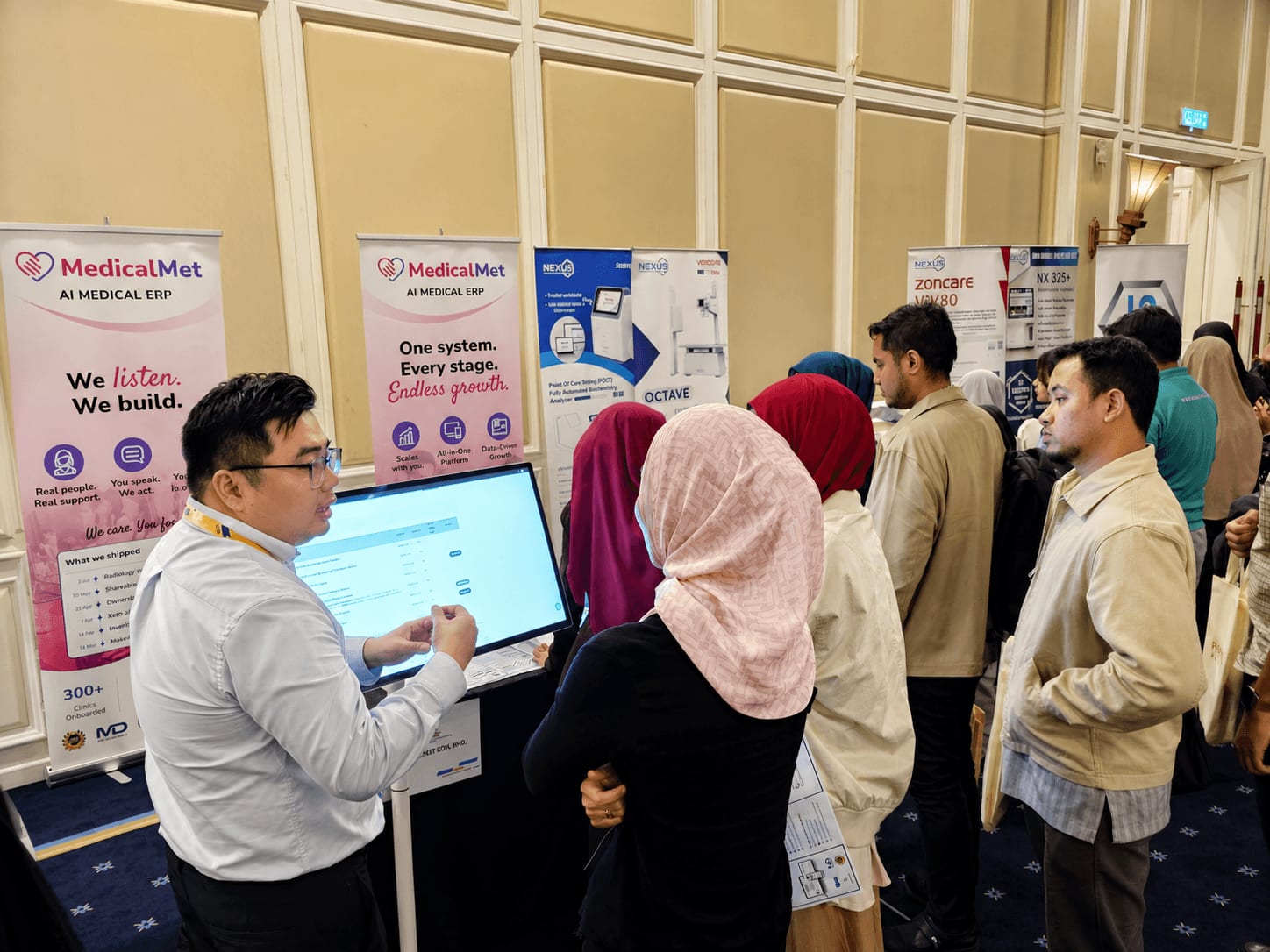
MedicalMet is expanding into Vietnam, and we are looking for local implementation and distribution partners to do it with. On 20 August 2026 we joined DEX CONNEX Vietnam 2026 in Ho Chi Minh City, a business matching programme run by the Malaysia Digital Economy Corporation (MDEC) under the Ministry of Digital Malaysia in partnership with the Sunwah Innovation Center. We went to put our clinic management system in front of Vietnamese partners, meet the companies that actually deliver software into Vietnamese healthcare, and come back with a concrete plan instead of a hunch.
This post covers what happened, what we now know about running a clinic management system in Vietnam, and exactly the kind of partner we want to hear from.
Why MedicalMet Is Expanding into Vietnam
Vietnam is not a new name on our map. It is already one of the markets MedicalMet serves, alongside Malaysia, Singapore, Brunei, the Philippines, Thailand and Hong Kong, and we maintain a dedicated clinic management software page for Vietnam covering Ho Chi Minh City, Hanoi, Da Nang and beyond. What we did not have was time on the ground with the people who put software into Vietnamese clinics. That is what changed this month.
The structural case for Vietnam is easy to state. It is a country of roughly 100 million people with a fast-growing private healthcare sector concentrated in Ho Chi Minh City, Hanoi and the resort cities. Public health insurance under BHYT (Bảo hiểm Y tế) now covers the large majority of the population, which steadily pushes patients toward registered facilities and steadily raises the record-keeping bar those facilities have to meet. Rising private demand plus rising formalisation is the same combination that made Malaysia a viable market for us in the first place.
MedicalMet today serves more than 300 clinics and over 5,000 healthcare professionals across the region. Every new market has to clear the same bar before we commit engineering to it. Are the front-desk workflows close enough to what we already handle that the platform is useful on day one, and different enough that we have to build something specific? Vietnam clears both halves of that test.
What Happened at DEX CONNEX Vietnam 2026?
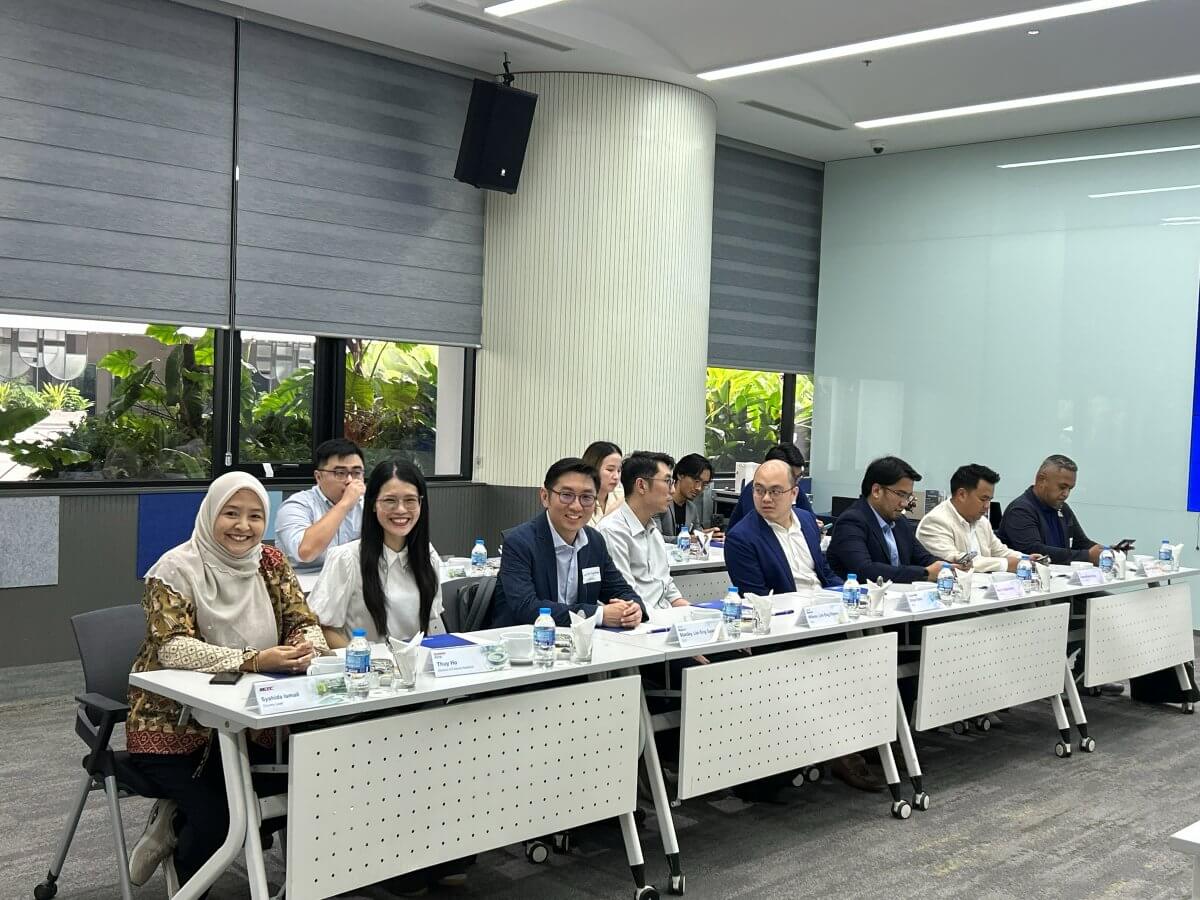
The programme was opened by Mr. Firdauz Othman, Consul General of Malaysia in Ho Chi Minh City, together with Ms. Syahida Ismail, Director of Market Access at MDEC, and Ms. Katie Nguyen, Deputy General Director of Sunwah Group Vietnam. Four Malaysian companies presented, each from a different vertical, followed by B2B matching sessions with Vietnamese counterparts.
- MedicalMet, AI-powered clinic management and medical ERP for private healthcare
- WAHDAH, smart mobility
- SiteGiant, e-commerce
- Nadi Tech, digital infrastructure

For MedicalMet this was our second MDEC-supported market mission into the region, after TECHSAUCE Global Summit 2025 in Bangkok. The formats are different. Bangkok was a showcase, Ho Chi Minh City was a matching exercise, and matching is far more useful once you already know what you want to ask.
Coverage from MDEC, Sunwah and Sidec
The organisers and hosts documented the programme as it ran. Start here if you want the wider picture beyond MedicalMet.
DEX CONNEX Vietnam 2026 opens in Ho Chi Minh City, with opening remarks from the Consul General of Malaysia and four Malaysian technology companies on the ground.
The 20 August business matching day: four Malaysian solutions across healthcare, mobility, e-commerce and infrastructure, plus follow-up discussions with FPT Software and Galaxy Holdings.
The afternoon market exposure session at Saigon Hi-Tech Park, taking the Malaysian companies into FPT Software and the Galaxy Innovation Hub.
The same Day 2 afternoon session on Facebook, with the full photo set from Saigon Hi-Tech Park.
The Day 2 afternoon session on Instagram, carrying the same gallery from FPT Software and the Galaxy Innovation Hub.
The Day 2 afternoon session posted to X, the short-form version of the Saigon Hi-Tech Park visit.
Five Malaysian startups in the Startup Wheel International Track at InnoEx 2026, with AquFish taking first place.
The ecosystem dinner after InnoEx, bringing MDEC, SDEC, SCENIC and the Malaysian companies around one table.
Inside FPT Software at Saigon Hi-Tech Park
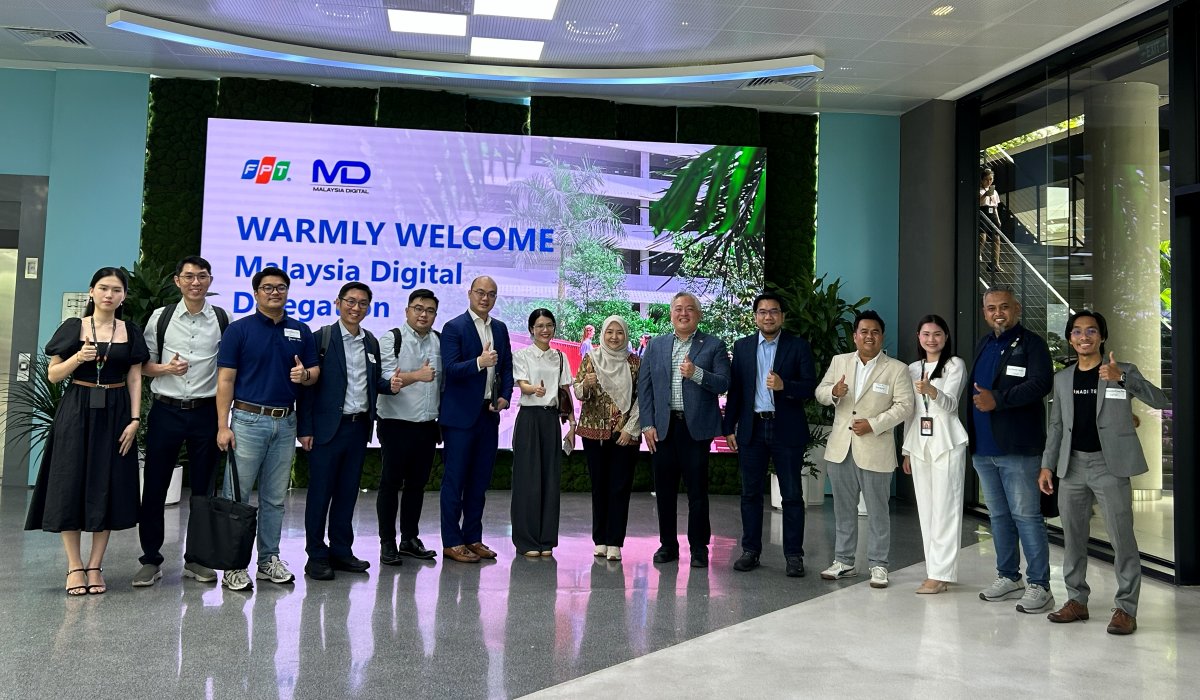
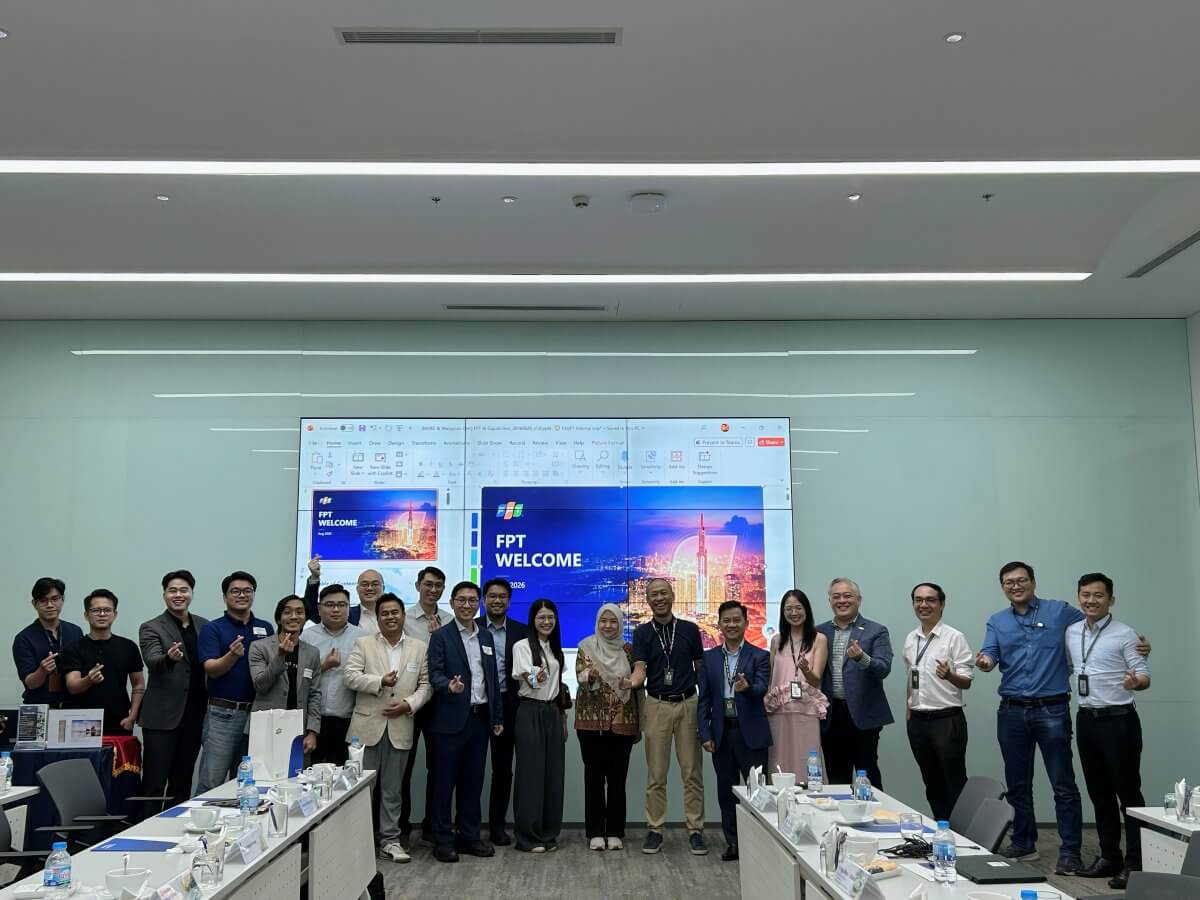
The afternoon took the delegation to Saigon Hi-Tech Park for a session with FPT Software, hosted by Chairman Mr. Nguyen Duc Quynh. FPT is a useful first stop precisely because it is nothing like us in scale. Healthcare sits inside a broad digital transformation portfolio there rather than being the whole business, which makes it a good place to learn how healthcare software actually reaches a Vietnamese customer.
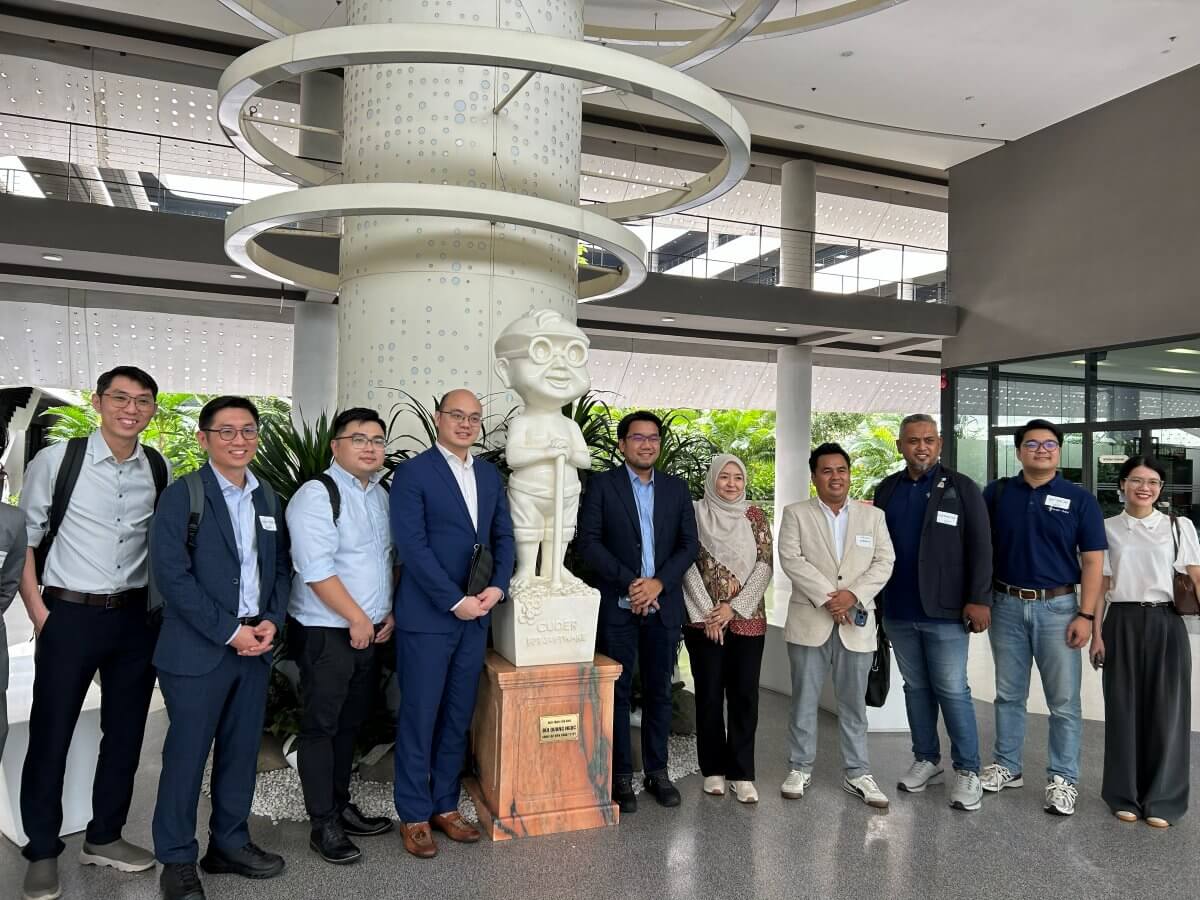
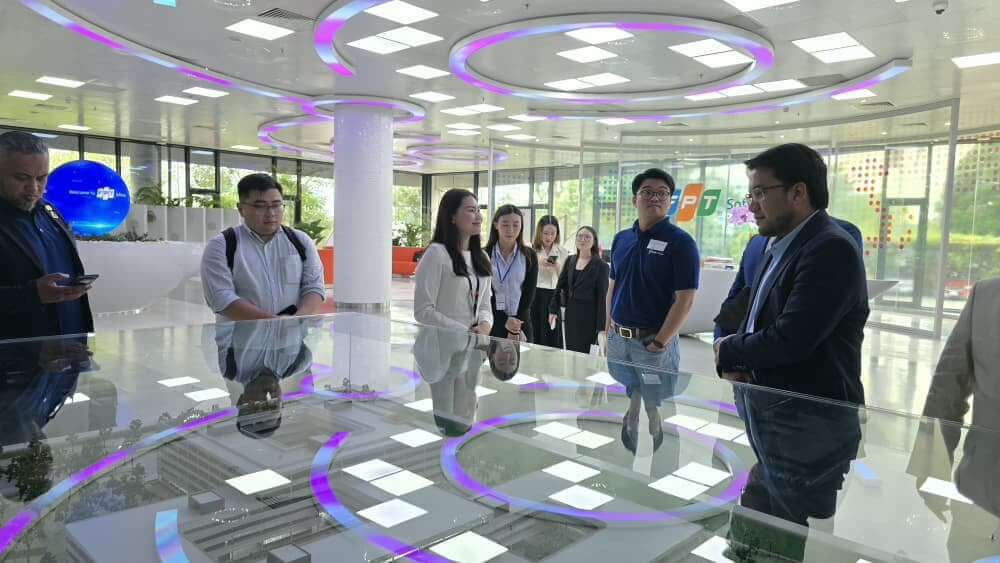
FPT opened its briefing with a section titled "Possibilities by Vietnam" before it said anything about its own service lines, which tells you how the market is being pitched to visiting companies right now. The rest of the session covered the group structure, service offerings and people development at a scale that puts our own engineering team in perspective.
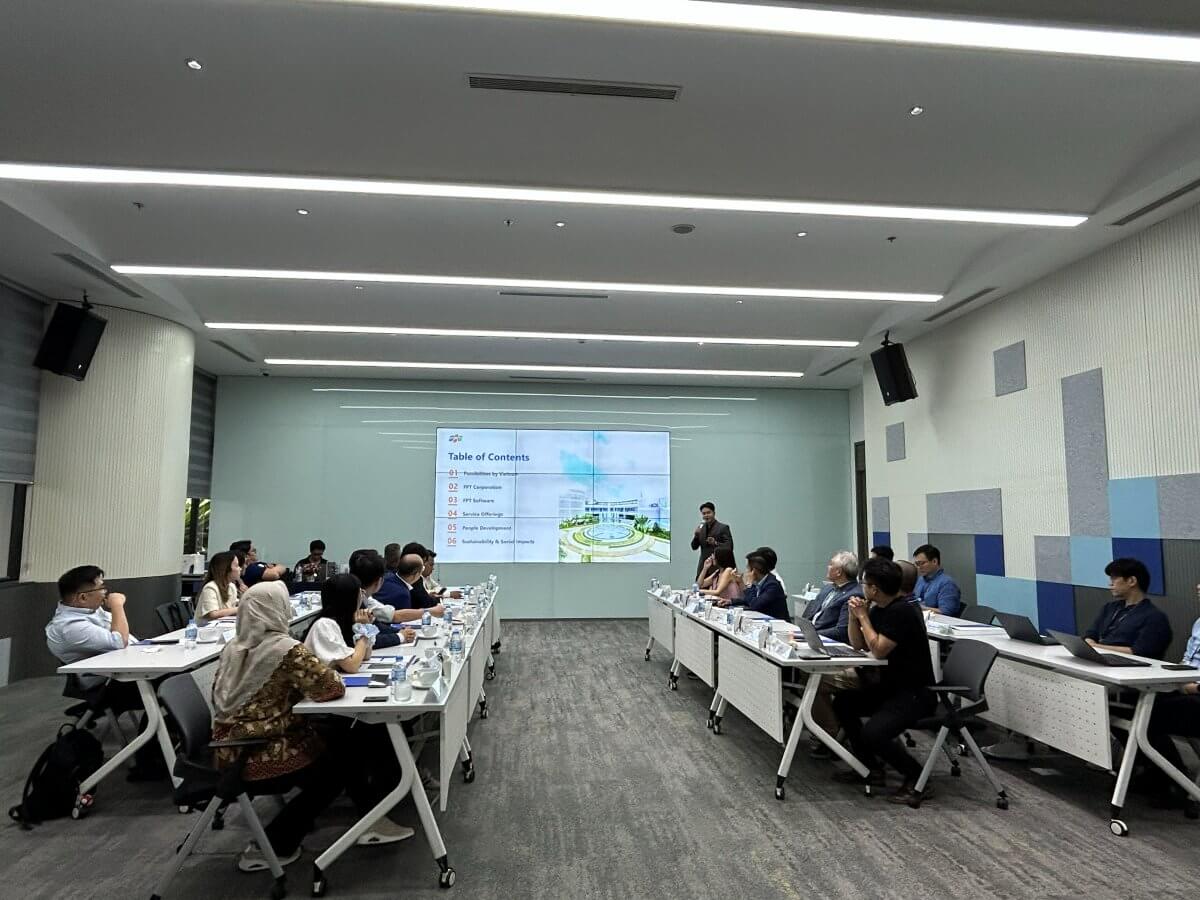
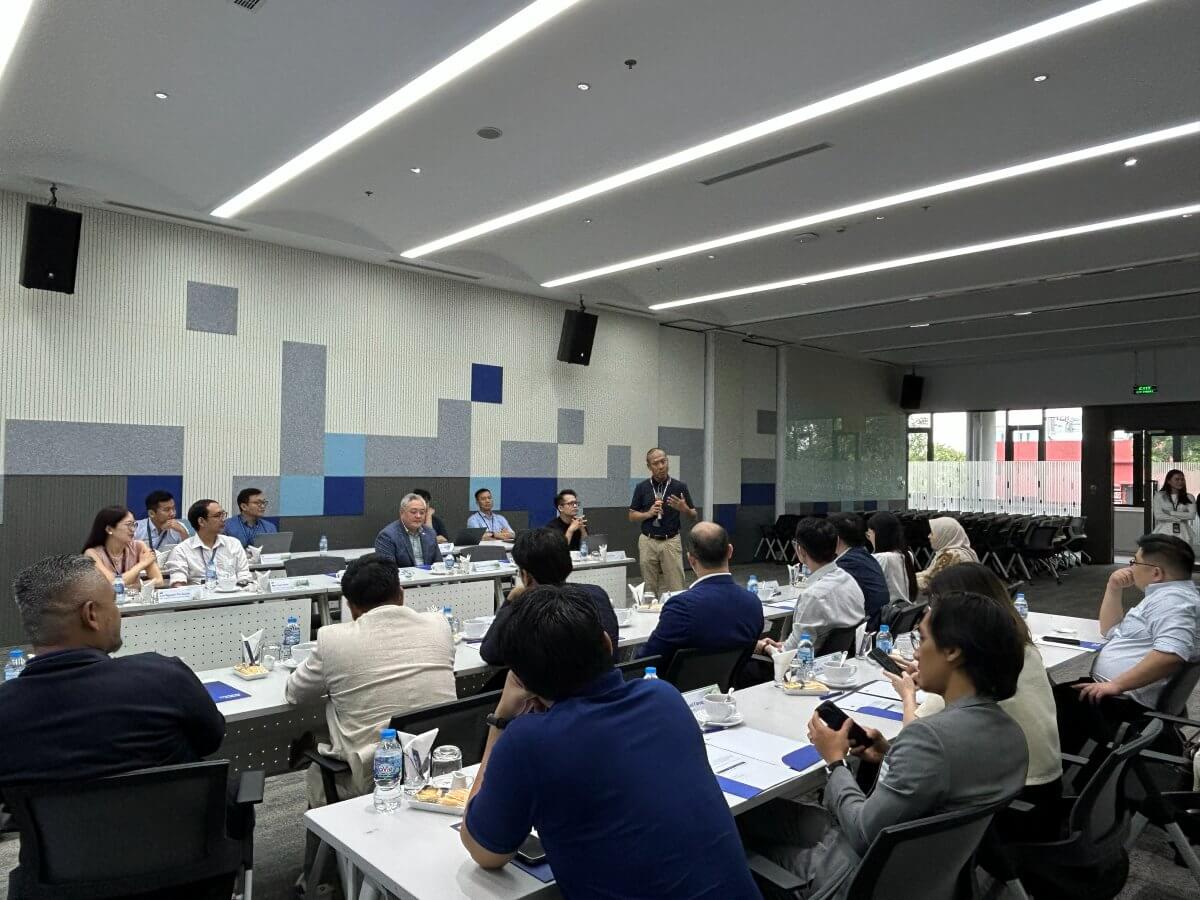
Our clearest takeaway was structural rather than clinical. Enterprise digital transformation in Vietnam is largely delivered through large domestic systems integrators with their own implementation teams, their own customer relationships and their own delivery methodology. A foreign SaaS product rarely arrives at a Vietnamese customer directly. It arrives inside somebody else's programme of work. That reframes our question from "how do we sell in Vietnam" to "whose implementation capacity do we plug into, and what does our product have to expose for that to be painless".
Inside the Galaxy Innovation Hub
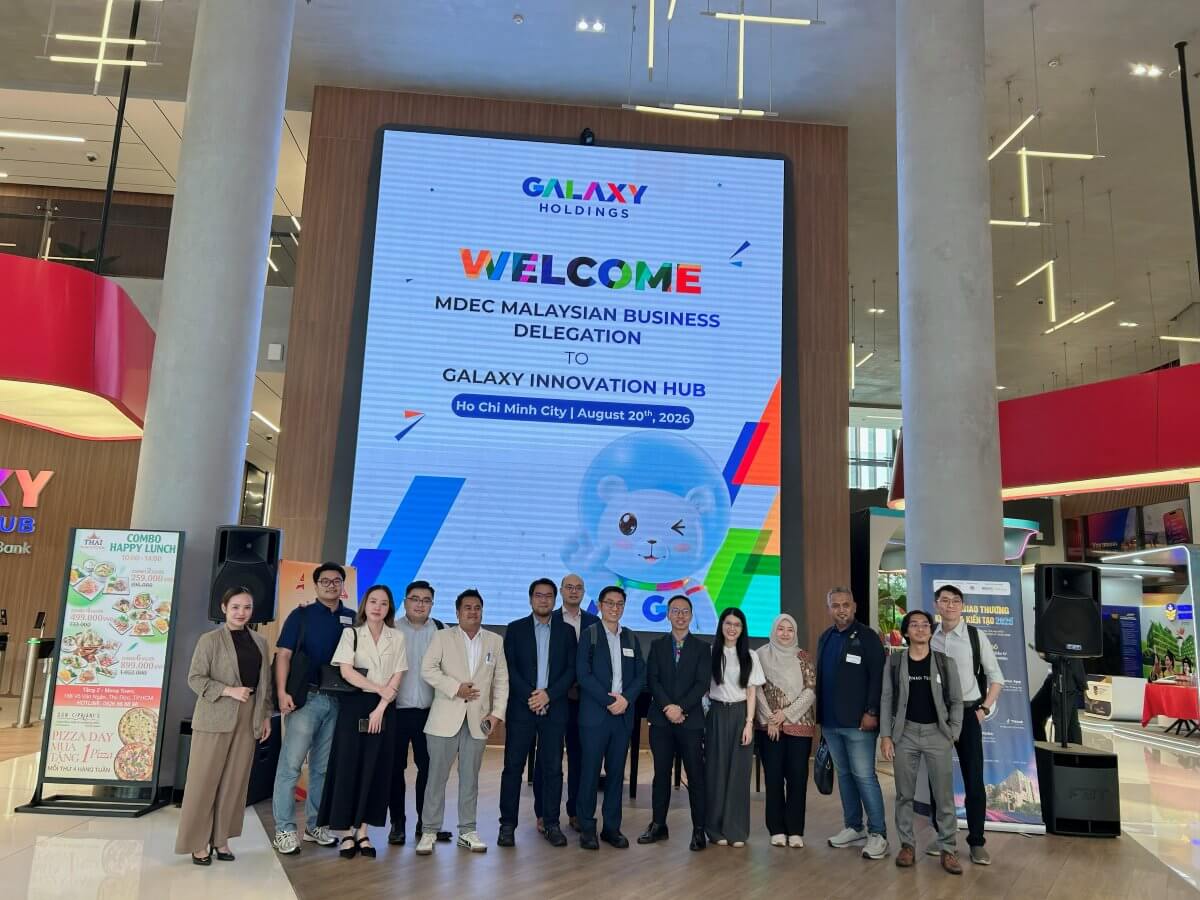
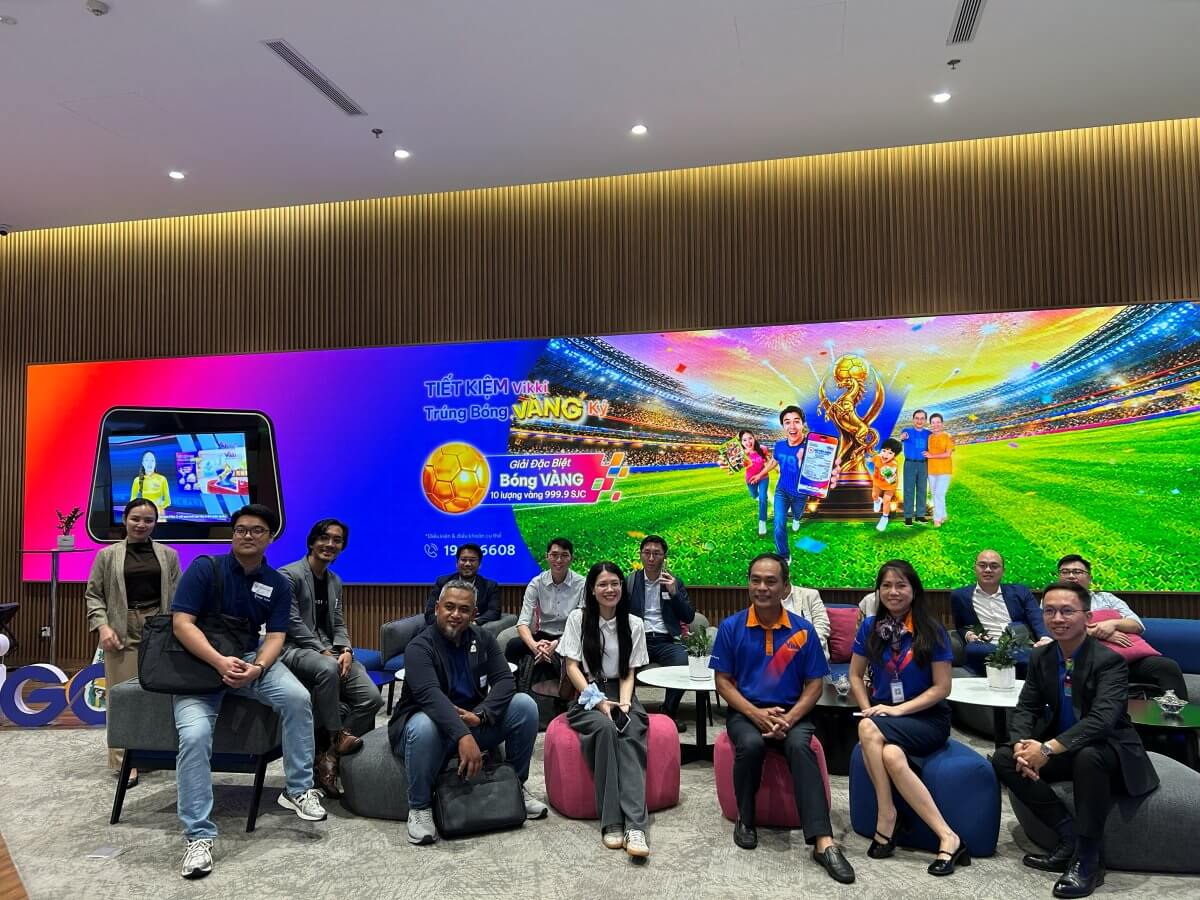
The second host was Galaxy Holdings, at its Galaxy Innovation Hub, with Strategy Director Mr. Harry Do. The hub is built around consumer-facing digital products, including the Vikki digital bank, and walking it was the most instructive half hour of the day for anyone thinking about patient-facing software.
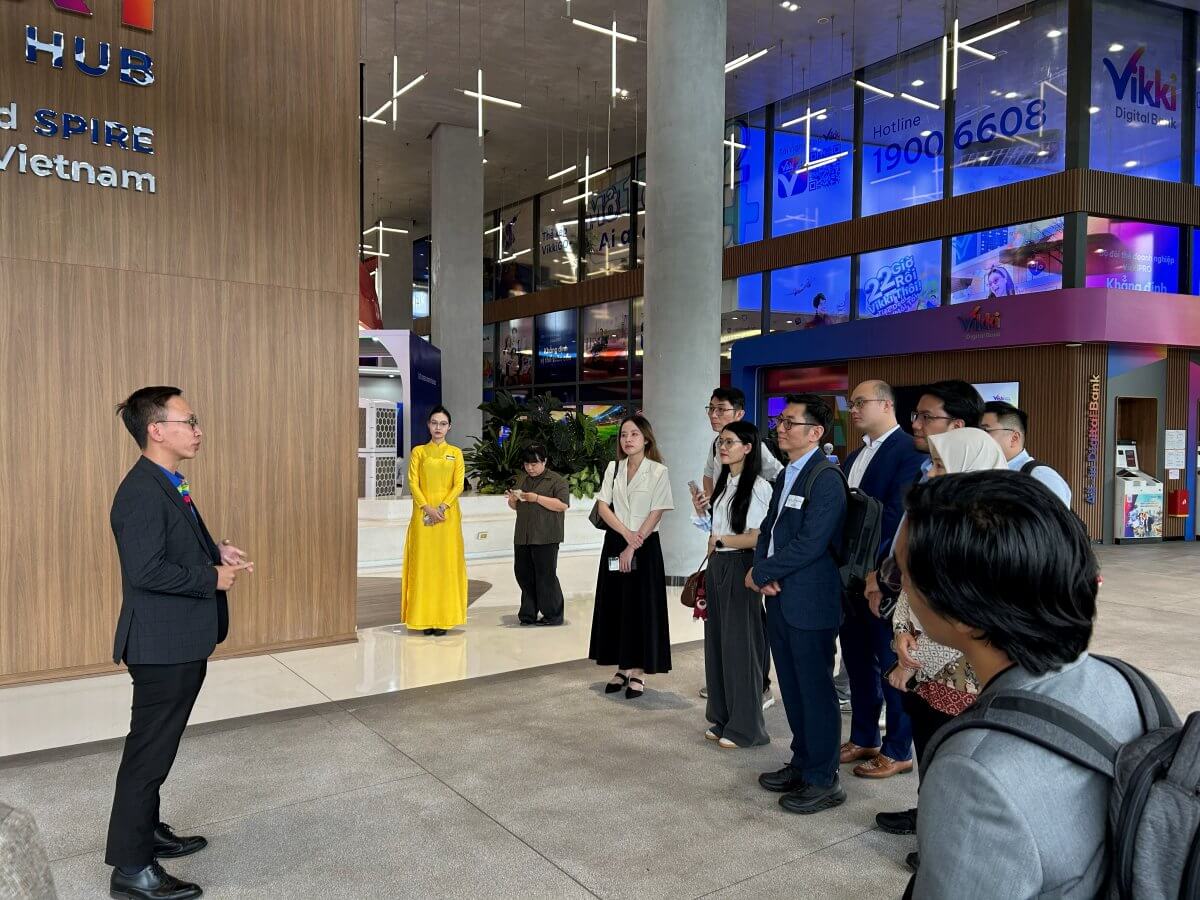
What stood out was the standard Vietnamese consumers are already held to by their banking and lifestyle apps. That standard is the one a clinic management system gets judged against the moment a patient touches it. Our patient app and online booking do not get compared to whatever software the clinic used before. They get compared to the slickest app on the patient's phone.
InnoEx 2026, Startup Wheel and the Sidec Ecosystem Dinner
MedicalMet also exhibited at InnoEx 2026, where five Malaysian companies competed in the Startup Wheel International Track: Global Cerah, AxxonAI, AquFish, Reclimate and Faradays Energy. Congratulations to AquFish on taking first place. Sidec then hosted an ecosystem dinner that brought together MDEC, Sarawak Digital Economy Corporation (SDEC), Sabah Creative Economy and Innovation Centre (SCENIC) and the Malaysian companies on the ground, which is the kind of room where the practical warnings get shared rather than the polished ones.
What Does a Clinic Management System Need to Work in Vietnam?
Here is the substance, in roughly the order these issues will block you. None of it is exotic. All of it is the kind of thing that turns a two-week localisation estimate into a two-quarter one if you find it after signing a partner.
Vietnamese Language First, Not Later
Vietnamese is not a menu-translation problem. It reaches into clinical documentation, patient letters, printed receipts and search. Diacritics have to survive storage, indexing, PDF generation and thermal printing without mangling. Staff search patient names with and without tone marks and expect both to work. MedicalMet already ships a Vietnamese interface, and our AI Treatment Notes and AI Note Translation are built for exactly this multilingual reality, where a clinician documents in one language and the record has to be readable in another. That existing investment is the single biggest reason Vietnam is a realistic market for us rather than an aspirational one.
Invoicing in Vietnamese Dong
Billing in Vietnamese dong is not a currency symbol swap. Amounts run several orders of magnitude larger than ringgit or Singapore dollar figures, minor units are not used in practice, and both rounding conventions and receipt layouts have to reflect that. Vietnam also runs its own electronic invoicing regime, entirely separate from the Malaysian system we integrate with for LHDN e-Invoice compliance. Anyone assuming one e-invoice integration covers Southeast Asia is in for a bad quarter.
Zalo, Not WhatsApp, Is the Default Patient Channel
This is the observation with the largest product consequence, and the one we would have underweighted from Kuala Lumpur. Across Malaysia, Singapore and Brunei our entire patient engagement layer rides on WhatsApp. WhatsApp reminders are the reason clinics on MedicalMet report up to a 90 percent reduction in no-shows (MedicalMet customer data, 2025). In Vietnam, WhatsApp is not the default. Zalo is. A reminder engine that only speaks WhatsApp is, in practice, a reminder engine that does not run.
That does not invalidate the architecture. Our communications module sends through configurable channels rather than one hardcoded pipe, which is what makes adding a market-specific channel a scoped piece of work instead of a rewrite. But it does mean that "we support WhatsApp" is not an answer to a Vietnamese clinic, and it moves channel work up the roadmap ahead of things we would otherwise have prioritised.
BHYT Insurance and Medical Records Requirements
Vietnam's medical records framework sits under Ministry of Health rules, with Circular 46/2018/TT-BYT as the reference point for electronic medical records, and the sharpest deadlines in that roadmap have been pointed at hospitals rather than small private clinics. Private clinics therefore sit outside the hardest compliance pressure today but firmly inside the direction of travel. On the billing side, mixed BHYT and private-pay patient flows call for an insurance-aware invoicing model, closer to our insurance panel pricing workflow than to straight cash billing.
“The clinical core of a clinic management system travels across borders. The layer patients actually touch, the language, the currency, the messaging app and the insurance rules, does not. Getting that second layer wrong is how regional expansion quietly fails.”
— MedicalMet Team
The Test We Apply to Every New Market
Before committing engineering to a country we ask two questions. Does the platform deliver value on day one without modification? And is the market-specific work a bounded list we can name, or an unbounded one we are guessing at? Vietnam passed the first test before this trip. The trip turned the second answer from a guess into a list.
What Would We Have Got Wrong from a Desk in Kuala Lumpur?
Two things, both of them assumptions rather than facts. The first is the messaging channel. Every market we currently serve is WhatsApp-dominant, and after enough years that stops looking like a market characteristic and starts looking like a law of nature. It is not. A Vietnam launch plan built around WhatsApp reminders would have produced a demo that impressed nobody who runs a clinic there.
The second is the route to market. Our instinct, shaped by Malaysia, is direct sales with hands-on onboarding, the model behind the way we support Southeast Asian clinics moving to cloud management. In Vietnam the realistic route runs through local implementation partners who already hold the customer relationship. That is a different motion, a different commercial structure and a different set of things the product has to make easy. Finding that out in month nine of a direct-sales push would have been expensive.
We Are Looking for Partners in Vietnam
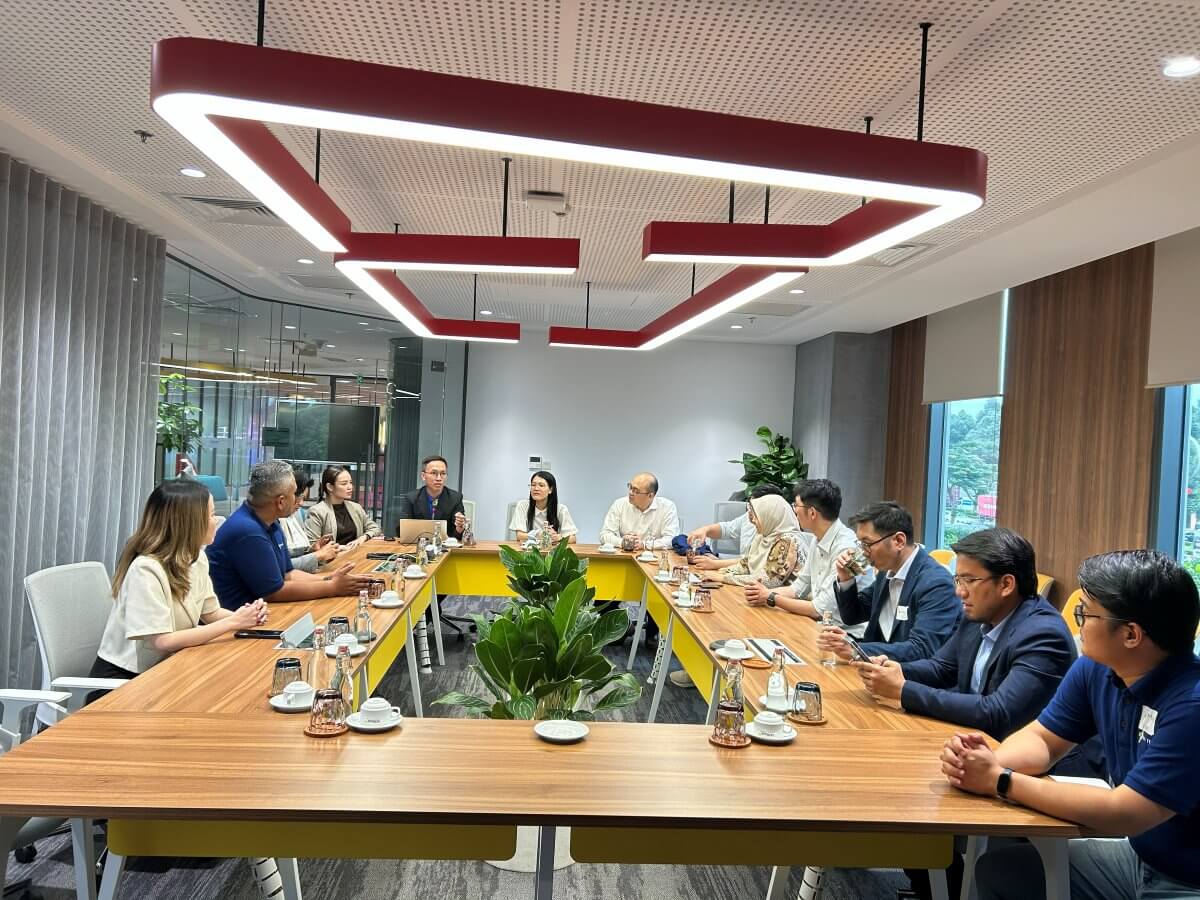
This is the practical ask. MedicalMet is expanding into Vietnam through partners rather than trying to run a direct sales motion from Kuala Lumpur, and we are actively looking for the people who already sit between Vietnamese clinics and their software.
- Implementation partners who deploy and support clinical or business software for Vietnamese healthcare providers
- Distribution and reseller partners with existing relationships across private clinics, polyclinics and small hospital groups
- Systems integrators running healthcare digital transformation programmes that need a clinic management and medical ERP layer
- Consultants and advisors who know Vietnamese clinic billing, BHYT workflows and local invoicing requirements
What you get from our side is a platform that is already live across seven markets, a Vietnamese interface and multilingual AI documentation that exists today rather than on a roadmap, and a team that has done this localisation work before in Thailand and Hong Kong. What we want from your side is the customer relationship and the on-the-ground delivery.
If that sounds like you, reach us at info@medicalmet.com or connect with us on LinkedIn. If you run a clinic in Vietnam and simply want to see the platform as it stands today, our plans and pricing are public and the demo is free.
Thank You
Our thanks to MDEC and the Sunwah Innovation Center for organising DEX CONNEX Vietnam 2026, to the Consulate General of Malaysia in Ho Chi Minh City, to FPT Software and Galaxy Holdings for hosting the delegation, and to Sidec, SDEC and SCENIC for their continued support of Malaysian companies expanding into the region. Missions like this one are the difference between a market you have read about and a market you have actually met.

MedicalMet Team
Official Blog