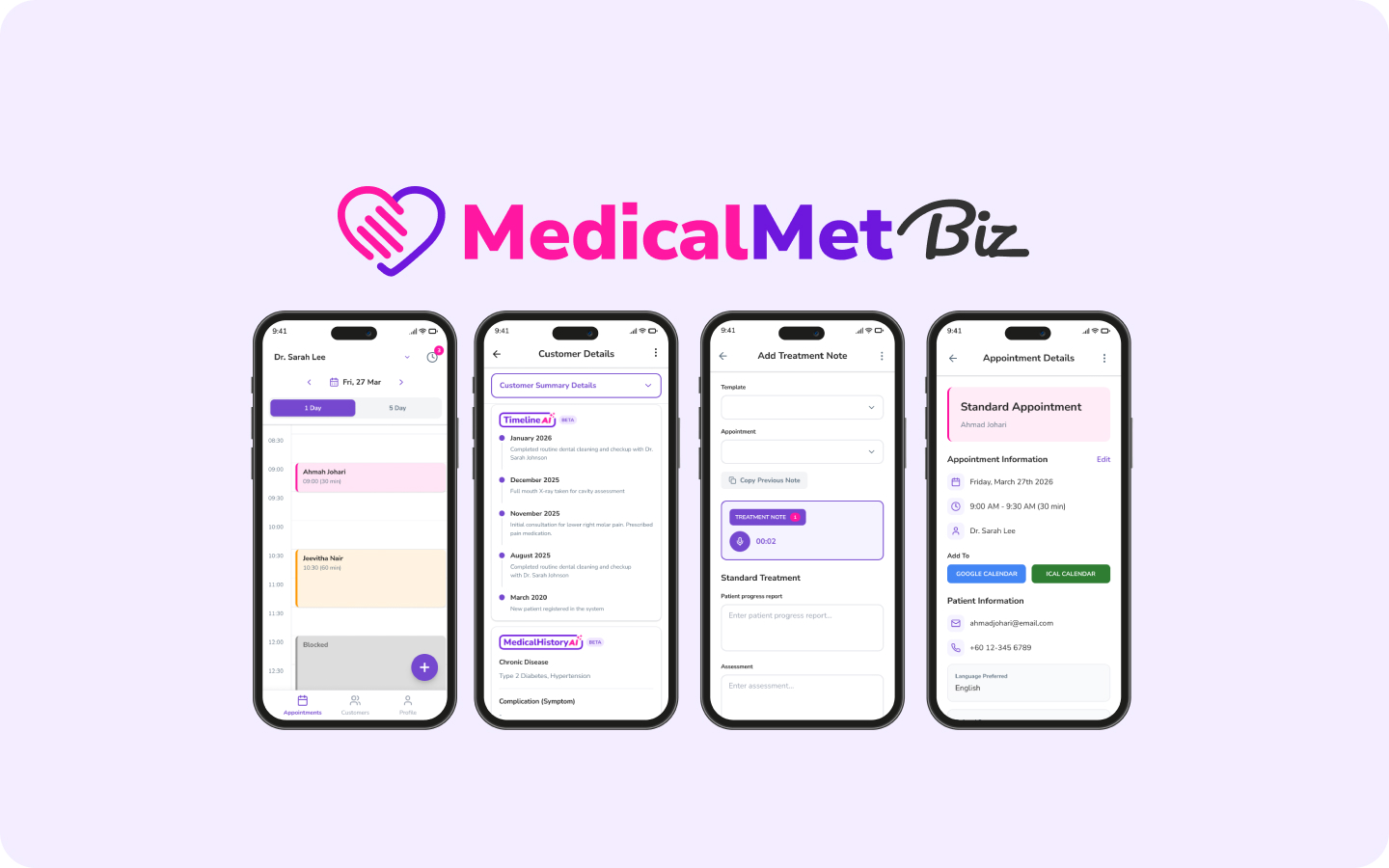
A modern clinic management system needs far more than basic scheduling and billing. In 2026, the essential features of a clinic management system include AI-powered documentation, automated patient communication, real-time analytics, and cloud-native architecture. Clinics that invest in the right features save 1–2 hours of admin time per day and reduce no-shows by up to 90% (MedicalMet customer data, 2025).
Whether you run a solo GP practice or a multi-branch operation, these 10 features form the foundation of an effective clinic management system. Missing even one can create bottlenecks that slow your entire operation.
What Makes a Clinic Management System "Modern" in 2026?
A modern system is cloud-based, mobile-accessible, and uses AI to automate repetitive tasks. It integrates all clinic functions — scheduling, clinical documentation, billing, inventory, and patient communication — into a single platform. Legacy systems that treat these as separate modules with clunky integrations no longer meet the standard.
Here are the 10 features that every clinic management system should offer:
1. Smart Appointment Scheduling
The foundation of any clinic system. Smart scheduling goes beyond a calendar — it should support colour-coded time slots, multiple practitioner views, recurring appointments, and drag-and-drop rescheduling. It should also integrate directly with automated reminders to reduce no-shows.
2. Automated Patient Reminders and Confirmations
Manual reminder calls waste hours of front-desk time every day. Automated confirmations via WhatsApp or SMS notify patients before their appointment and let them confirm or reschedule with a single tap. Clinics using MedicalMet's automated reminders report up to a 90% reduction in no-shows (MedicalMet internal data, 2025).
3. AI-Powered Treatment Notes
Documentation eats into consultation time. AI treatment notes let doctors dictate findings and generate structured SOAP notes in seconds. MedicalMet has processed over 10,000 voice treatment notes — saving doctors an estimated 10 hours per week in documentation time.
4. Integrated Billing and Invoicing
Billing should flow directly from the consultation. When a doctor completes a visit, the system should auto-generate an invoice with the correct items, taxes, and panel pricing. Integrated invoicing eliminates double-entry and ensures LHDN e-invoicing compliance for Malaysian clinics.
5. Centralised Patient Records and History
Complete patient profiles with visit history, allergies, medications, documents, and treatment notes in one place. Doctors should see the full picture before a patient walks in — not search across paper files or disconnected systems.
6. Inventory and Medication Management
For clinics that dispense medication, stock and inventory control with automatic low-stock alerts and batch tracking prevents expired medications from reaching patients and reduces waste. This is especially critical for GP clinics in Malaysia where in-house dispensing is standard.
7. Queue Management System
Long wait times are the top complaint among clinic patients. A digital queue system with real-time status updates — visible on a TV display or the patient's phone — manages expectations and reduces perceived wait times. This is not a nice-to-have; it directly impacts patient satisfaction and Google reviews.
8. Reporting and Analytics Dashboard
You cannot improve what you cannot measure. A real-time dashboard showing daily revenue, patient volume, no-show rates, and staff productivity helps clinic owners make data-driven decisions. Detailed reports on revenue trends, top services, and patient demographics guide business strategy.
9. Online Booking and Patient App
Patients expect to book appointments online — at midnight, on weekends, whenever it suits them. Online booking paired with a patient app for viewing upcoming appointments, receiving reminders, and accessing visit summaries meets this expectation and reduces call volume to your front desk.
10. WhatsApp-Based Patient Communication
In Southeast Asia, WhatsApp is how people communicate. WhatsApp reminders have significantly higher open rates than email or SMS. Clinics using WhatsApp for appointment reminders, follow-up messages, and broadcast campaigns see stronger patient engagement and retention than those relying on traditional channels.
How Many of These 10 Does Your Current System Have?
If your current software covers fewer than 7 of these features, you are likely spending hours on manual workarounds. A modern all-in-one system eliminates those gaps.
How Do These Features Work Together as a System?
The real power of these features is integration. When scheduling, reminders, documentation, billing, and inventory all share the same data, nothing falls through the cracks. A patient books online → receives a WhatsApp reminder → checks in via the queue → the doctor dictates AI treatment notes → billing auto-generates → inventory adjusts. That is a modern clinic workflow — zero double-entry, zero paper.
“The best clinic management systems do not just digitise your existing workflow — they eliminate the steps that should never have been manual in the first place.”
— MedicalMet Team
Related FAQs

Cedric Lau
Business Development Manager, MedicalMet