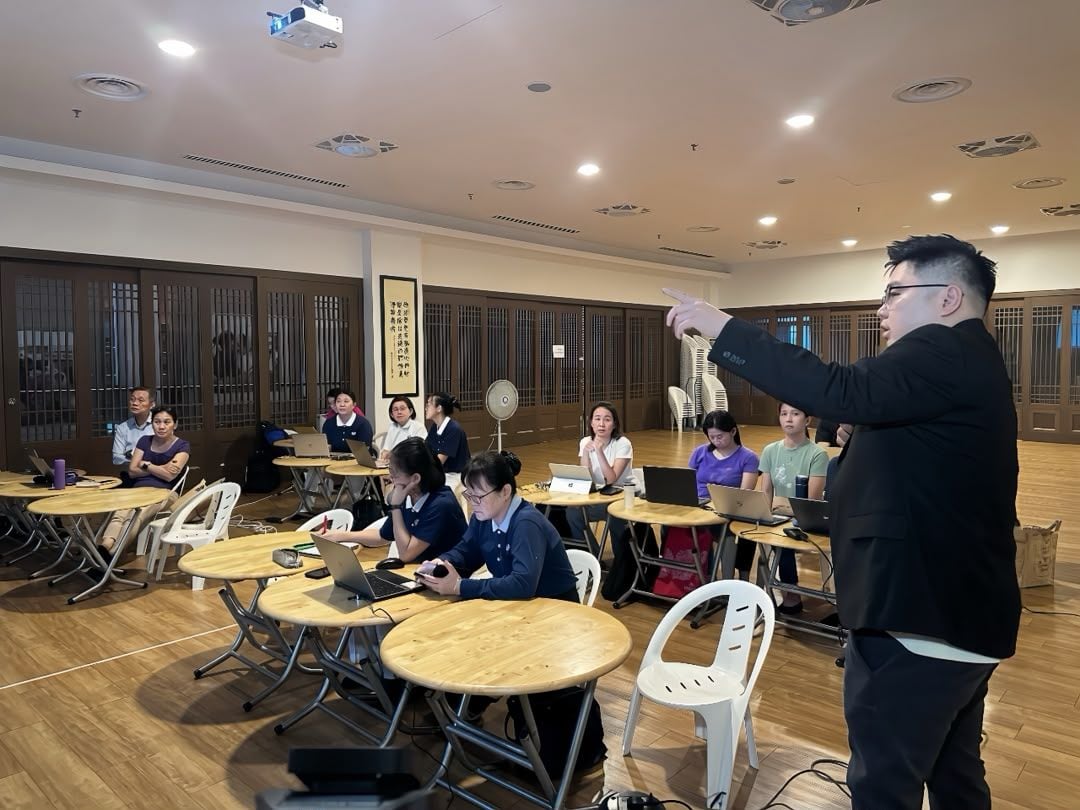
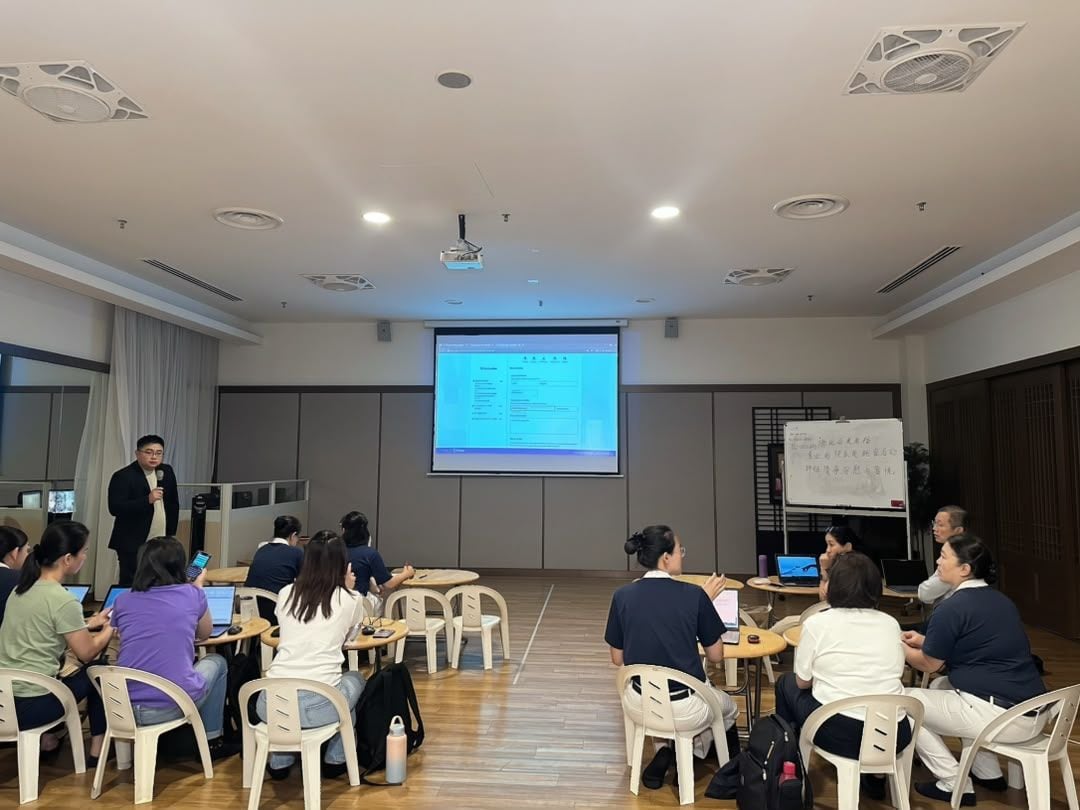
MedicalMet is now sponsoring the clinic system used by Tzu Chi International Medical Association (TIMA) volunteers during their volunteer medical consultations. To get the team started, we ran a system introduction and hands-on user training for 20 volunteer doctors and nurses at the Tzu Chi Jing Si Hall in Kuala Lumpur in October 2026. The session ran in both directions. We showed the volunteers how MedicalMet works. They showed us how a volunteer medical consultation actually runs.
What Is the Tzu Chi International Medical Association?
The Tzu Chi International Medical Association, known as TIMA, is the medical volunteer network of the Tzu Chi Foundation. Its members are doctors, nurses, pharmacists and other healthcare professionals. They give their own time, on top of their clinical work, to provide free medical care to communities that need it.
That work includes the volunteer medical consultations this sponsorship supports. The doctors and nurses who staff them are volunteers. The patients they see are real, and so are the records those patients leave behind.
The session at a glance
- Organisation: Tzu Chi International Medical Association (TIMA)
- Venue: Tzu Chi Jing Si Hall, Kuala Lumpur
- Date: October 2026
- Attendees: 20 volunteer doctors and nurses
- Format: system introduction, then hands-on user training on the volunteers’ own devices
- Also on the agenda: understanding how TIMA’s volunteer medical consultations run, so the system fits the way they work
- MedicalMet’s role: sponsor — TIMA uses MedicalMet for its volunteer consultations at no cost
Why Is MedicalMet Sponsoring Tzu Chi’s Medical Volunteers?
A volunteer clinic needs good records as much as any private clinic does. Arguably more. A patient seen this month may come back next month and meet a different volunteer doctor. If their history lives in a paper folder, or in the last doctor’s memory, the new doctor starts from zero.
That continuity problem is exactly what clinic software exists to solve. MedicalMet already runs daily operations for more than 5,000 healthcare professionals across Southeast Asia (MedicalMet internal data, 2026). Sponsoring TIMA puts the same system in the hands of doctors and nurses who work for free. They deserve tools at least as good as the ones they use in paid practice.
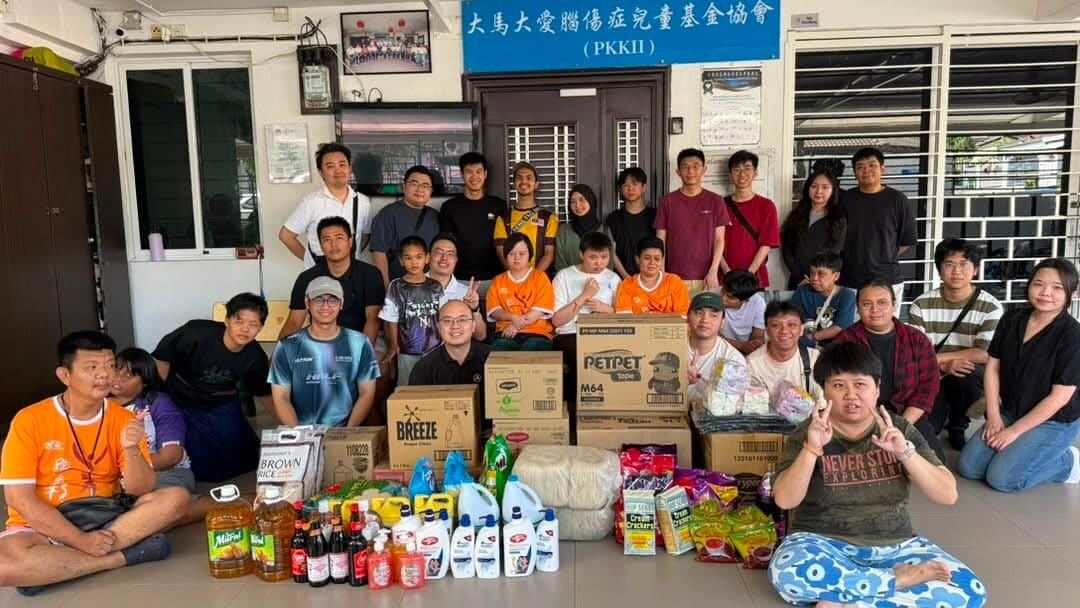
It also fits how the team already spends time outside the product. In August we spent a morning at a home for children and adults with special needs, on our CSR charity visit to PKKII Insan in Happy Garden. Sponsoring TIMA is the same instinct, applied to the thing we know best: clinic software.
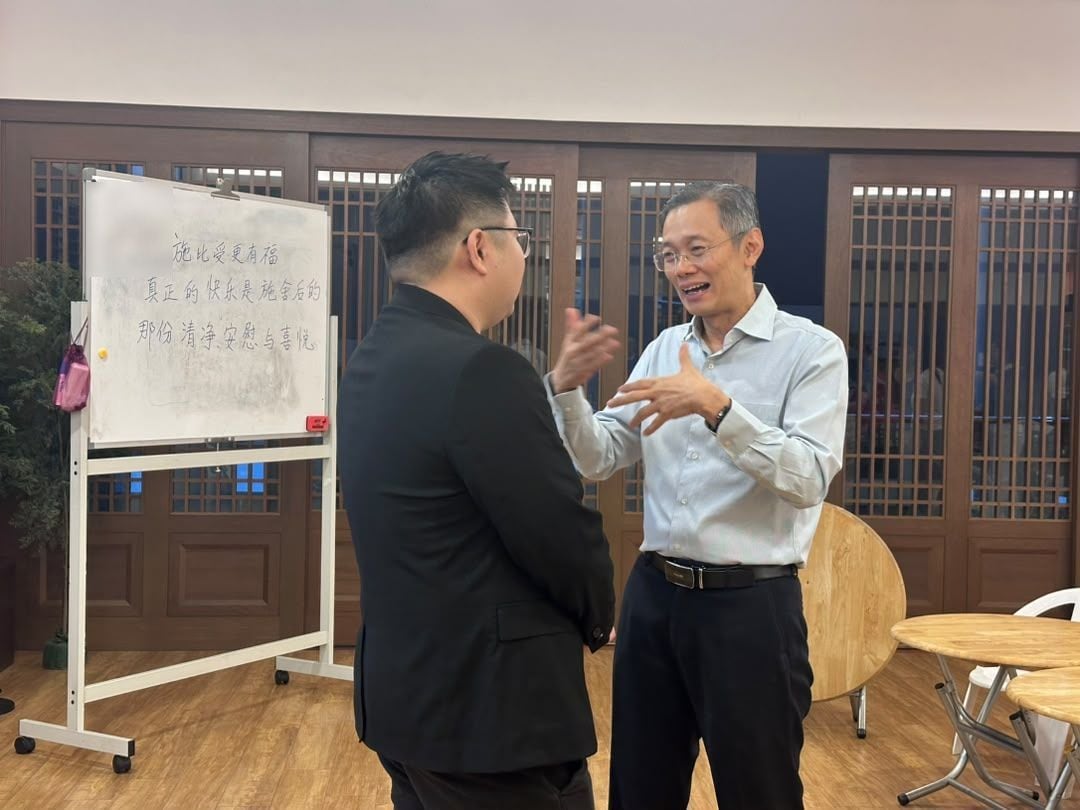
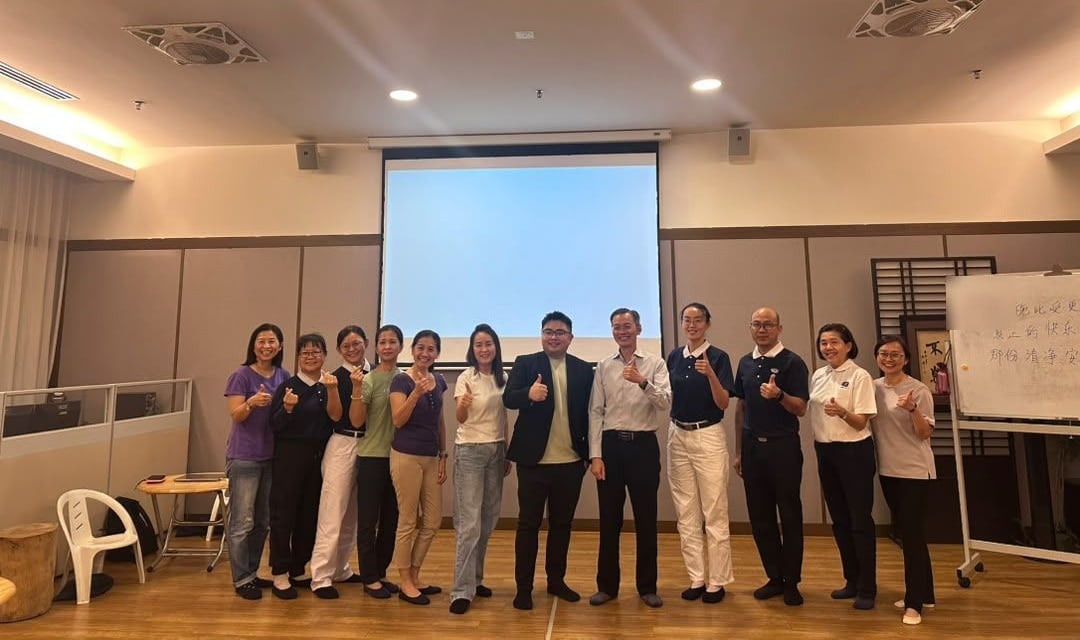
“Giving is more blessed than receiving. True happiness is the serenity, comfort and joy that come after giving.”
— Written on the whiteboard at Jing Si Hall during our session (translated from the Chinese: 施比受更有福,真正的快乐是施舍后的那份清净、安慰与喜悦)
How Does a Volunteer Medical Consultation Work?
Part of the session ran the other way. Before you set up a system for a clinic, you need to understand how that clinic moves. So we spent time with the volunteers on how their consultations run, from the moment a patient arrives to the moment they leave with their medicine.
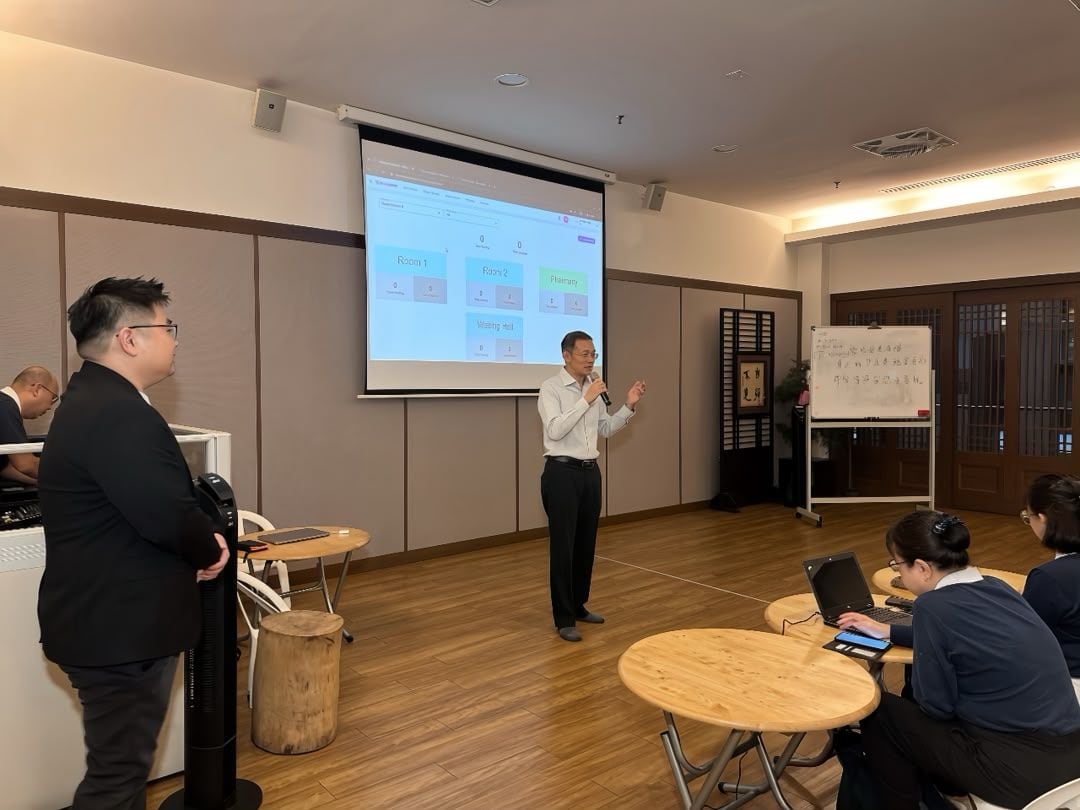
The queue board we put on screen mirrors that flow. A patient registers and waits in the Waiting Hall. A volunteer doctor calls them into Room 1 or Room 2. From the consultation room, they move to the Pharmacy for their medication. There is no cashier station on the board. The consultation is free, so the visit ends at the pharmacy.
What makes a volunteer clinic different from a private one?
On paper, the flow looks like any GP clinic. In practice, a few things change when every person running the clinic is a volunteer:
- The doctor changes; the patient does not. The record has to carry the patient’s story, because the next volunteer doctor may never have seen them before.
- Patients arrive within a fixed window. Every hand-off, from registration to room and from room to pharmacy, has to be quick and visible.
- The visit ends at the pharmacy. No invoice, no payment, no panel claim. What matters is that the doctor’s prescription reaches the pharmacy table intact.
- Volunteers have day jobs. Some will only open the system on consultation days. It has to be learnable in one session and easy to pick back up weeks later.
- There is nothing to install. Volunteers bring their own laptops, so the system has to run on whatever device turns up.
What Did the MedicalMet Training Cover?
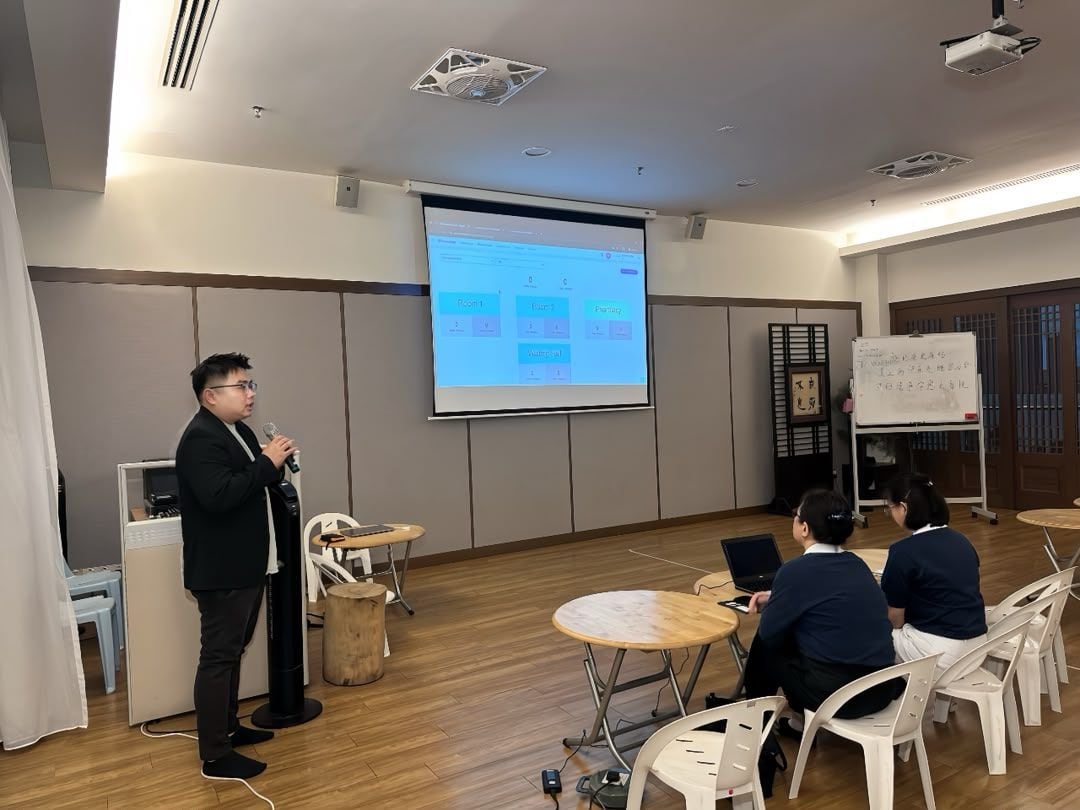
The training had two parts. First came a system introduction: what MedicalMet is and how its screens connect to each other. Then came hands-on user training, with the volunteers logged in and working through the same steps on their own devices.
Following one patient through the clinic
Each station on the queue board maps onto a part of MedicalMet. Taken together, they cover a volunteer consultation from start to finish:
- Registration: the patient’s record is created on the first visit and found again on the next, with every past consultation on a single patient page.
- Waiting Hall: the patient joins the live queue system. The front desk sees who is waiting and which room is free.
- Room 1 and Room 2: the doctor calls the next patient with one click and writes the consultation into the electronic medical record. The next volunteer doctor sees the same history.
- Pharmacy: the prescription arrives with the patient’s record, and medication dispensing handles labelling and stock.
Doctors who would rather talk than type can use AI treatment notes. Speak the consultation, and MedicalMet fills in the note template in near real time. Clinics on MedicalMet have processed more than 10,000 voice treatment notes so far (MedicalMet customer data, 2026).
Why we trained on their own devices
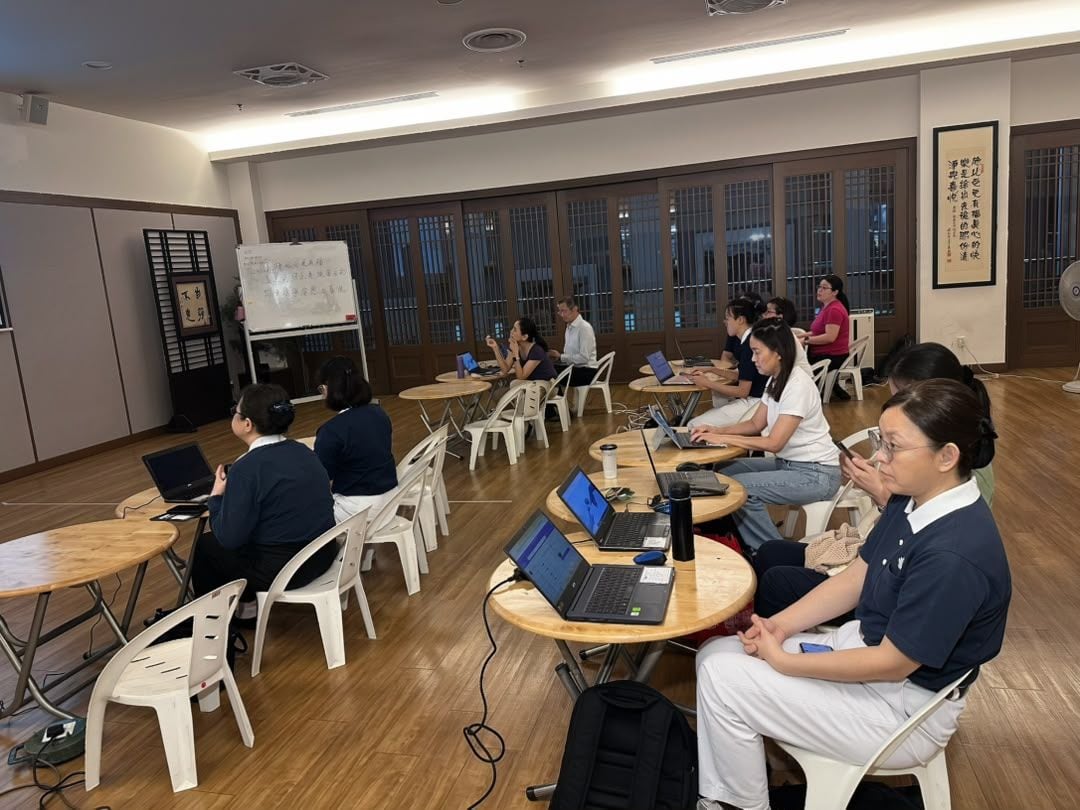
MedicalMet is a web app. It runs in a browser on a laptop, tablet or phone, with nothing to install and no server to set up. For a volunteer team, that matters. Training on the device you will actually use removes one more surprise on consultation day.
A free clinic’s records still need protecting
A volunteer clinic holds the same sensitive patient data as a paid one. MedicalMet protects it with AES-256 encryption, role-based access, audit trails and daily backups. The details are on our security page.
Can Clinic Management Software Work for Free Clinics and NGOs?
Yes. A free clinic does not need invoices, panel claims or payment links. It needs everything that comes before them. That means a patient record that survives a change of doctor, a queue that keeps the hall calm, and a prescription that reaches the pharmacy intact. A private GP clinic relies on exactly the same building blocks every day.
What changes is the people. A volunteer team has less time to learn a system and less patience for software that gets in the way. That is why we trained on site rather than sending a manual, and why we came to listen as well as teach. If you run a volunteer or NGO clinic, these are the questions worth asking of any system:
- Does it run in a browser? Volunteers should be able to log in from any laptop, tablet or phone.
- Is there one shared patient record? Any authorised volunteer doctor should see the full history, not just their own notes.
- Can the queue match your stations? Your rooms, your pharmacy, your waiting area — not a generic template.
- Can you control who sees what? Role-based access lets each volunteer see only what their role needs.
- Will someone train your team in person? One afternoon on site beats a PDF nobody reads.
Thank You, Tzu Chi International Medical Association
Thank you to the Tzu Chi International Medical Association for trusting us with your volunteer consultations, and to the Tzu Chi Jing Si Hall in Kuala Lumpur for hosting us. Most of all, thank you to the 20 doctors and nurses who gave up their own time to learn a new system. That time goes straight back to your patients.
We will share an update once the system is running at their consultations. If you run a volunteer medical programme of your own and want to talk through your clinic flow, get in touch with our team.

MedicalMet Team
Official Blog